What this article covers
- Why distance from hospitals changes how you should choose a policy
- Ambulance cover, emergency intimation and pre- and post-hospitalisation expenses
- Being ready for a reimbursement claim when treatment is outside the network
- How a government scheme such as PM-JAY and a private policy can work together
- Family, senior and self-employed cover, waiting periods and exclusions
- Exploring options and arranging cover without travelling
Quick answer
How should someone in Jambughoda choose health insurance? Start from where you would actually be treated, which for serious illness is usually a larger town such as Halol, Godhra or Vadodara. Check that those hospitals are in the insurer's cashless network, that the policy covers ambulance charges, and how quickly an emergency admission must be reported. Because treatment may happen away from home and outside the network, also be ready to claim by reimbursement, which depends on keeping every bill and report.
- Health insurance covers treatment wherever it happens in India, subject to the policy terms. It is not limited to hospitals near your home.
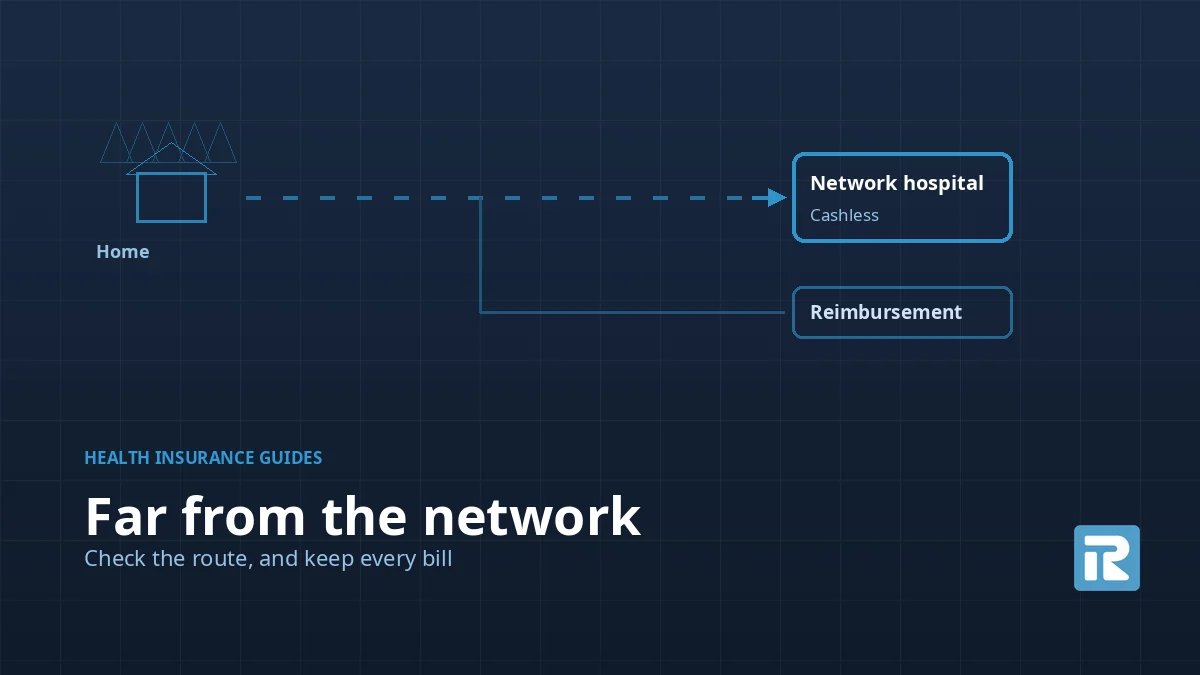
- Cashless treatment needs a network hospital. Elsewhere, you pay and claim reimbursement.
- PM-JAY is a government health assurance scheme with its own eligibility rules. A private policy can be held alongside it.
- People in Jambughoda and other parts of Panchmahal can explore health insurance options remotely and discuss their requirements with Raulji.
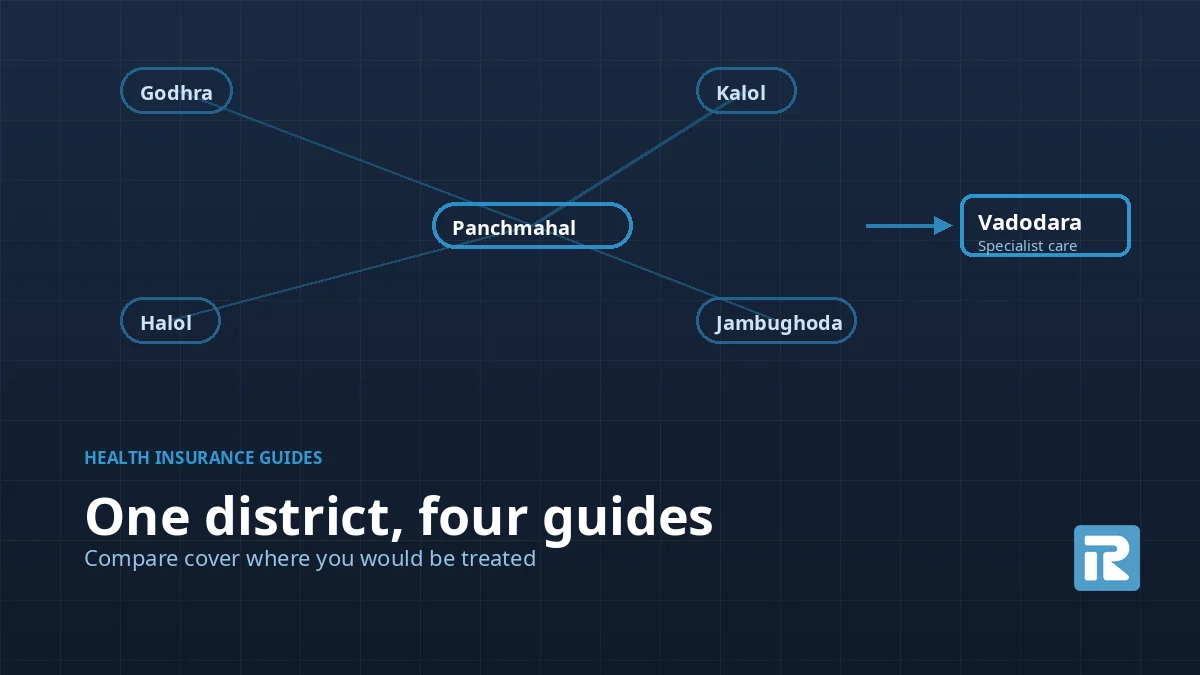
Jambughoda is one of the smaller talukas of Panchmahal district, and much of it is forest, including the Jambughoda Wildlife Sanctuary. Day-to-day care is often available close by, but a serious illness or an operation usually means travelling to a larger town: Halol, Godhra, or Vadodara for specialist treatment. The same is true for many villages across the eastern part of the district.
That distance changes how a health policy should be chosen. A policy that looks good on paper but has no network hospital where you would actually go, or that pays little towards an ambulance, will disappoint at the moment it matters. This guide is about choosing and using health insurance from a place like Jambughoda. It does not recommend any insurer or product.
Why distance from hospitals changes the choice
Health insurance covers hospital treatment anywhere in India on the policy's terms, so a policy bought in Jambughoda covers treatment in Vadodara. What distance changes is how the claim works: whether the hospital you reach is in the insurer's network, and whether you can meet the policy's deadline for reporting an emergency.
Families in large cities can usually choose between several network hospitals nearby. A family in Jambughoda may have one or two realistic options for serious treatment, and those are the ones to check. Before buying, list the hospitals you would actually go to in Halol, Godhra and Vadodara, then check each against the insurer's current network.
If none of them is in a particular insurer's network, that insurer's cashless benefit is of little use to you, however large its network is elsewhere. That is a better reason to choose between insurers than a small difference in premium.
Emergencies, ambulances and the expenses around an admission
Most health policies cover road ambulance charges up to a stated limit, and expenses for a set number of days before admission and after discharge. Both matter more when the hospital is far from home.
Check the ambulance limit in the Customer Information Sheet. A transfer from Jambughoda to a hospital in Vadodara is a longer journey than most city policies are designed around, and the policy limit may not cover the full cost.
Pre-hospitalisation and post-hospitalisation cover pays for tests, consultations and medicines related to the admission, for the number of days the policy states. For a family that has to travel for follow-up visits after an operation, a longer post-hospitalisation period is genuinely useful.
What a policy usually does not pay for: clinic visits and day-to-day care
Most health insurance policies pay for hospital admissions and the treatment around them, not for routine visits to a doctor's clinic or for everyday medicines. Unless a policy specifically includes outpatient benefits, the care a family in Jambughoda receives close to home is usually paid for by the family.
This surprises many families, because most of the medical care they actually use is outpatient: a fever, a check-up, a follow-up visit, a monthly prescription. Health insurance is designed for the less frequent but far more expensive event of a hospital admission. Knowing that from the start avoids disappointment, and it explains why the hospitals that matter for the policy are the larger ones in Halol, Godhra or Vadodara rather than the clinic in the village.
Day care procedures
Some treatments that once needed an overnight stay are now done in a few hours, such as certain eye procedures and some forms of chemotherapy. Policies generally cover these as day care procedures even though there is no 24-hour admission. For a family travelling from Jambughoda, a day care procedure may still mean a full day away, so check the list of covered day care procedures in the policy and whether follow-up visits fall within the post-hospitalisation period.
Being ready for a reimbursement claim
A reimbursement claim is made after you pay the hospital yourself, by sending the claim form and documents to the insurer. It applies when treatment is at a hospital outside the network, and it depends entirely on the paperwork you keep.
Families far from network hospitals are more likely to need reimbursement at some point, for instance after an emergency admission at the nearest available hospital. A reimbursement claim is only as strong as its documents, so it helps to know what to collect before you need to.
Keep these from every admission
- The discharge summary, signed by the treating doctor
- The itemised final bill and every payment receipt
- Prescriptions, and bills for medicines bought outside the hospital
- Investigation reports, such as blood tests and scans
- Ambulance receipts
- Copies of everything you send to the insurer, with the date you sent it
Submit the claim within the time the policy allows. If you cannot travel to submit documents, ask the insurer how to send them; many accept scanned copies first, followed by originals.
Preparing the family before an emergency
In an emergency, the person who travels with the patient is often not the person who bought the policy. A short written record kept at home, and a copy on a family member's phone, means anyone can handle the insurance side while the patient is being treated.
A one-page health insurance record for the household
- The insurer's name, the policy number and the names of everyone covered
- The insurer's claim helpline or third-party administrator contact
- The time limit for reporting an emergency admission, as stated in the policy
- The nearest network hospitals in Halol, Godhra and Vadodara
- Each family member's existing conditions and regular medicines
- The renewal date, so the policy is never allowed to lapse
Government schemes and private health insurance
Ayushman Bharat Pradhan Mantri Jan Arogya Yojana (PM-JAY) is a government scheme that provides health cover of up to ₹5 lakh per family per year for secondary and tertiary hospitalisation at empanelled hospitals, for families who meet its eligibility criteria. It is separate from private health insurance.
Many households in rural Panchmahal may be eligible for PM-JAY. Eligibility is set by the government, and the scheme has been extended to include citizens aged 70 and above. The official PM-JAY portal is the place to check whether your family is covered and which hospitals are empanelled.
A family covered by PM-JAY can still buy a private policy. Some do so to have more choice of hospital, a higher combined sum insured, or cover for members or treatments the scheme does not include. Whether that is worthwhile depends on the family, and it is worth knowing what the scheme already provides before deciding.
Choosing cover for a family in Jambughoda
Family floater or individual cover
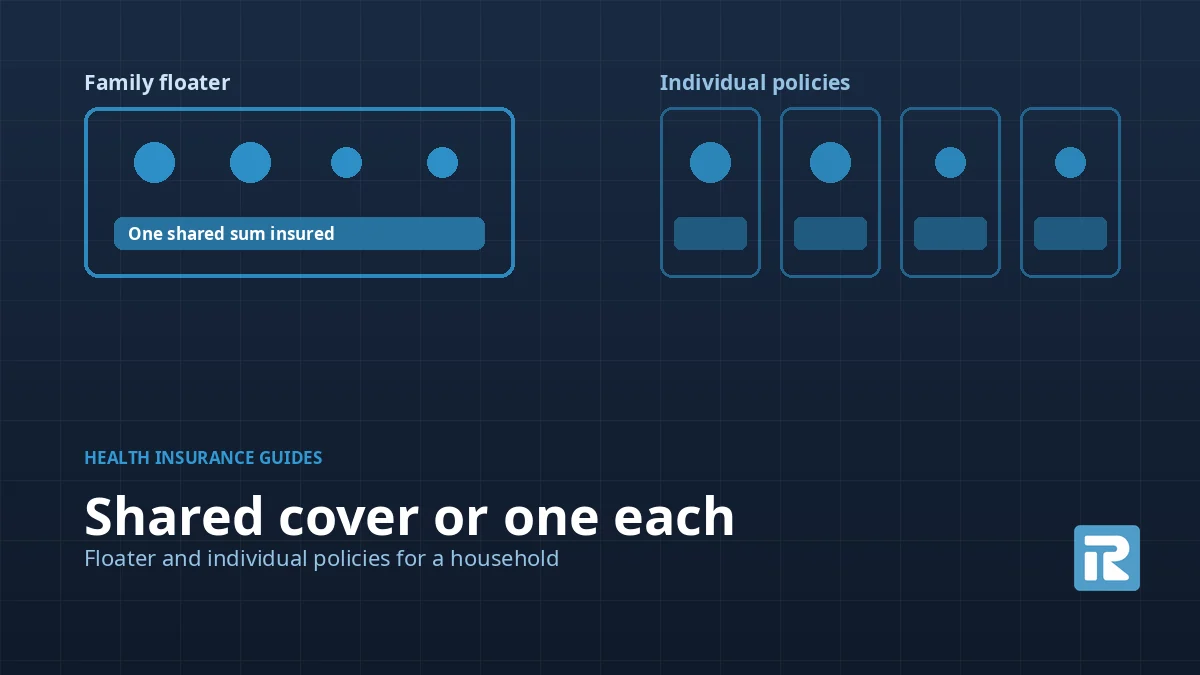
A family floater shares one sum insured across the family. It is often the most affordable way to cover a couple and their children. Older parents with existing conditions may be better on a separate policy, so that a claim for them does not use up the family's cover for the year.
Self-employed and farming families
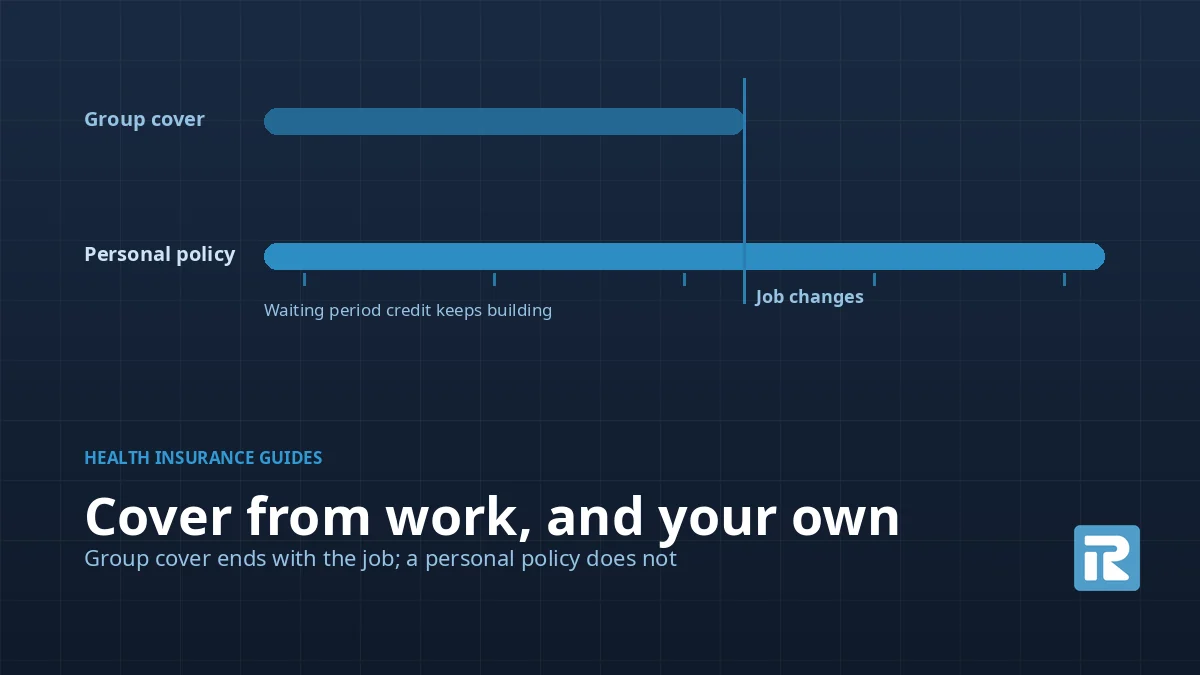
Many families in the smaller talukas run farms, shops or small businesses and have no employer cover. For them, a personal or family policy is the only private cover they will have, so continuity matters: renew every year without a break, so that waiting period credit keeps building.
Senior citizens
The IRDAI rules no longer set an upper age limit for buying health insurance, so older parents can be covered. Expect a higher premium, and check for co-payment and the waiting period for any existing condition.
Waiting periods, pre-existing conditions and exclusions
Health policies have waiting periods before some claims are payable: usually an initial 30 days, longer periods for specific illnesses, and a pre-existing disease waiting period that cannot exceed 36 months under the IRDAI rules. Declare every existing condition on the proposal form; undisclosed conditions are the most common cause of claim disputes. After 60 continuous months of cover, the policy cannot be contested for non-disclosure except where fraud is established.
Room rent limits, co-payment and sub-limits reduce what an accepted claim pays, and every policy lists permanent exclusions. For a step-by-step explanation of how waiting periods run and how claims are settled, see the guide to health insurance in Kalol, Panchmahal. For every term in detail, see the India health insurance guide.
Renewal and portability from a distance
Renewal is where families far from towns most often slip, because a reminder is missed or a payment cannot be made in time. A lapse can reset waiting periods that took years to earn. Most insurers allow renewal online, so note the renewal date in the household record and pay before it. If a better-suited insurer becomes available, portability lets you move at renewal and carry your earned waiting period credit for the ported sum insured, without restarting from the beginning.
Exploring health insurance without travelling
Health insurance no longer requires a visit to an office. Policies can be compared, proposal forms completed and documents shared digitally, and the policy document is usually sent by email. For a family in Jambughoda, that removes the need for a trip to Godhra or Vadodara just to buy cover.
People in Jambughoda and other parts of Panchmahal can explore health insurance options remotely and discuss their requirements with Raulji. Raulji Group is based in Vadodara and does not have an office in Jambughoda. Dharmendrasinh Raulji takes health insurance enquiries directly by WhatsApp and phone. Raulji Group helps people understand and arrange cover; it does not underwrite insurance, and claim decisions rest with the insurer. Details are on the insurance services page.
For how cover works in the larger towns nearby, see the guides to health insurance in Halol and health insurance in Godhra, and the district overview of health insurance in Panchmahal.
Frequently asked questions
Is there a cashless network hospital in Jambughoda?
That depends on the insurer, because each has its own network and lists change. Most families in Jambughoda go to Halol, Godhra or Vadodara for serious treatment, so check the insurer's current network for the hospitals you would use there.
Does a policy bought in Jambughoda cover treatment in Vadodara?
Yes. Health insurance covers treatment anywhere in India on the policy's terms. Cashless treatment needs the Vadodara hospital to be in your insurer's network; otherwise you can claim reimbursement.
Can I arrange health insurance in Jambughoda without visiting an office?
Yes. Policies can be compared and bought remotely, with documents shared digitally. People in Jambughoda and other parts of Panchmahal can discuss their requirements with Dharmendrasinh Raulji of Raulji Group by WhatsApp or phone.
What is cashless hospitalisation?
Cashless hospitalisation means the insurer settles the covered bill directly with a network hospital after authorising the treatment, so you do not pay the covered amount yourself. Outside the network, you pay and claim reimbursement.
Does health insurance pay for an ambulance?
Most policies cover road ambulance charges up to a limit stated in the policy. Check the limit, because a long transfer from a remote area to a city hospital may cost more than it allows.
Can I have PM-JAY and a private health insurance policy?
Yes. PM-JAY is a government scheme with its own eligibility rules and empanelled hospitals. A private policy can be held alongside it, for example to widen the choice of hospital or to cover members the scheme does not.
Does health insurance cover visits to a local clinic?
Usually not. Most policies cover hospital admissions, day care procedures and expenses shortly before and after an admission. Routine clinic visits and everyday medicines are covered only if the policy specifically includes outpatient benefits.
What is a waiting period?
A waiting period is the time from the start of a policy during which certain claims are not payable. The pre-existing disease waiting period cannot exceed 36 months under the IRDAI rules, and all waiting periods depend on renewing without a break.
Sources
Official sources for the regulatory statements in this article. Each one notes what it supports, so a claim can be checked against it.
- Ayushman Bharat PM-JAY, National Health AuthorityCover of up to ₹5 lakh per family per year, eligibility, the extension to citizens aged 70 and above, and empanelled hospitals.
- IRDAI (Insurance Products) Regulations, 2024Maximum pre-existing disease waiting period of 36 months, the 60-month moratorium and the removal of the upper age limit for buying health insurance.
- IRDAI Master Circular on Health Insurance Business, 29 May 2024Policyholder entitlements, including the Customer Information Sheet and cashless authorisation timelines.
Disclaimer. This article is for general information only and is not insurance advice or a recommendation of any insurer or product. Network hospitals, ambulance limits and scheme eligibility change. Read the Customer Information Sheet and policy wording, check PM-JAY eligibility on the official portal, and confirm current terms before deciding. Raulji Group does not underwrite insurance; claim decisions rest with the insurer.
Written by
Dharmendrasinh Raulji
Dharmendrasinh Raulji is Chairman of Raulji Group and handles its insurance advisory enquiries directly.