What this article covers
- Whether an individual policy or a family floater suits your household
- How to set a sum insured against what treatment actually costs where you would be treated
- Waiting periods, pre-existing diseases and why disclosure matters
- Cashless treatment in Godhra, and how to check a hospital is in the network
- Room rent, co-payment, sub-limits and exclusions, which decide what a claim pays
- Claims, renewal and portability, and the mistakes families most often make
Quick answer
What should a family in Godhra check before buying health insurance? Check four things before the premium: whether the hospitals you would use in Godhra, and in Vadodara for specialist care, are in the insurer's cashless network; the waiting period for any condition someone in the family already has; whether the policy carries a room rent limit or co-payment; and whether the sum insured is realistic for one serious admission. All four are stated in the policy's Customer Information Sheet.
- Health insurance pays for covered hospital treatment up to the sum insured, subject to waiting periods, exclusions and limits set out in the policy.
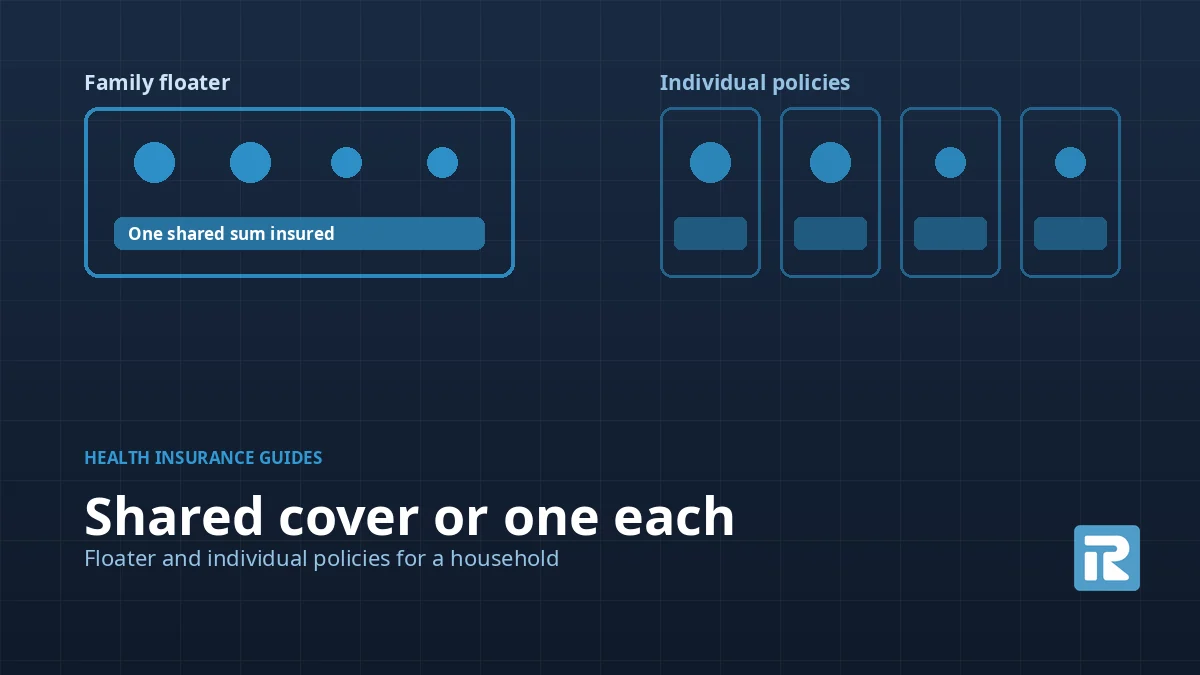
- A family floater shares one sum insured between everyone on the policy. Individual policies give each person their own.
- Under the IRDAI rules, the waiting period for pre-existing diseases cannot exceed 36 months.
- Raulji Group is based in Vadodara, and people in Godhra can discuss a health insurance requirement with Dharmendrasinh Raulji by WhatsApp or phone.
Godhra is the headquarters of Panchmahal district, and for many families across the district it is where hospital treatment starts. Some treatment is completed in the town. For specialist care, people often look further, most commonly to Vadodara. A health insurance policy bought in Godhra has to work in both places, and that single fact shapes most of the choices in this guide.
This guide is written for individuals and families in Godhra who are buying health insurance for the first time, or who hold a policy and want to know whether it would actually pay for a serious admission. It does not recommend an insurer or a product. It explains the terms that decide what a policy pays, and where to check each one before you commit. For the full India-wide explanation of those terms, see the health insurance guide for India.
What does health insurance cover?
Health insurance is a contract under which an insurer pays the covered medical expenses of the people named on the policy, up to the sum insured, for the conditions and events the policy covers. The core of almost every policy is hospitalisation: the costs of being admitted and treated in hospital.
Around that core, most policies add defined extras. Pre-hospitalisation and post-hospitalisation expenses are covered for a stated number of days before admission and after discharge. Day care procedures, which need no 24-hour stay, are usually covered. Many policies include ambulance charges up to a limit and AYUSH treatment on stated terms.
Routine outpatient care is the usual gap. A visit to a doctor's clinic in Godhra and the medicines prescribed there are generally not covered unless the policy specifically includes outpatient benefits. Families often discover this only when they first try to claim, so it is worth knowing at the start.
Individual policy or family floater: which suits a Godhra household?
A family floater covers several family members under one shared sum insured. An individual policy gives each person a separate sum insured. A floater usually costs less for a young family; individual cover protects each person's limit from being used up by someone else's claim.
Many families in Godhra live in joint or extended households, which makes this choice more than a pricing question. A floater for a couple and their children is a common and efficient arrangement. Adding parents in their sixties to the same floater is a different decision, because older members are more likely to claim, and one large claim can exhaust the shared cover for the rest of the policy year.
| Question | Family floater | Individual policies |
|---|---|---|
| How the sum insured works | One amount, shared by everyone covered | A separate amount for each person |
| Typical fit | A couple with young children | Older members, or anyone with an ongoing condition |
| Main risk | One large claim can use up the cover for everyone | Higher combined premium |
| What decides the premium | Usually driven by the oldest member covered | Each person's age and health |
A practical pattern for many households is a floater for the younger family and a separate policy for parents. Whether that suits your family depends on ages, health history and budget, and it is worth comparing both structures for the same members before deciding.
How much sum insured does a family in Godhra need?
The sum insured is the most a policy will pay in one policy year. A sensible figure is one that covers at least one serious admission at the hospital where you would actually be treated, including specialist treatment outside Godhra if that is where you would go.
There is no correct figure that applies to every family. Treatment costs differ between hospitals, between a district town and a large city, and between a short admission and a surgery with a long stay. A sum insured that would comfortably cover an admission in Godhra may not cover the same treatment at a larger private hospital in Vadodara.
Rather than starting from a round number, start from the hospitals. Ask what a significant admission there typically costs, then decide whether your sum insured covers it with room to spare. For a floater, remember that the same amount has to stretch across every member for the whole year.
Waiting periods and pre-existing diseases
A waiting period is the time from the start of a policy during which certain claims are not payable. A pre-existing disease is generally a condition diagnosed or treated before the policy began. Under the IRDAI rules, the waiting period for pre-existing diseases cannot be longer than 36 months.
Most policies carry three kinds of waiting period. An initial waiting period, usually the first 30 days, during which only accidental injuries are covered. A specific illness waiting period for named conditions and procedures, which varies a great deal between products. And the pre-existing disease waiting period, which applies to conditions you already had when cover began.
For a family where a parent has diabetes or high blood pressure, the pre-existing disease waiting period is often the most important figure in the whole policy. It decides how long that parent waits before treatment related to the condition is covered. A shorter period can justify a higher premium.
Cashless treatment and network hospitals in Godhra
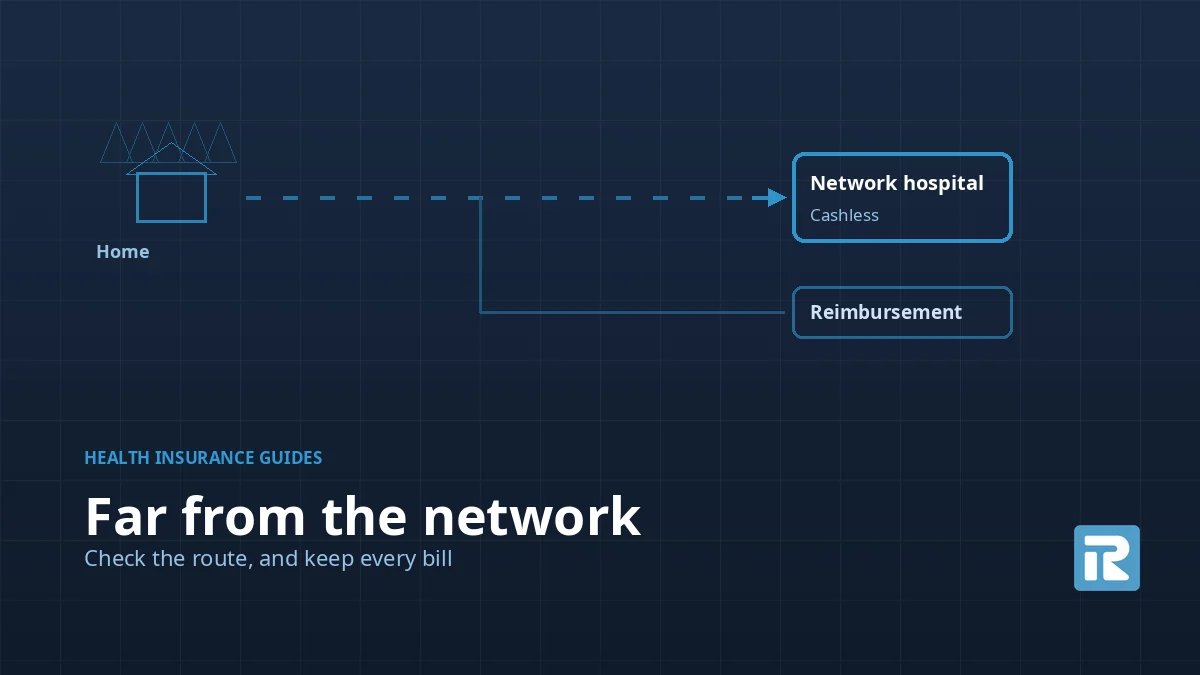
Cashless treatment means the insurer settles the hospital bill directly, so you do not pay the covered amount yourself. It is available only at hospitals in the insurer's network. At a hospital outside the network, you pay the bill and then claim reimbursement.
Every insurer publishes its own network list, and the lists differ. Before buying, check whether the hospitals your family would use in Godhra are in that insurer's network, and check the hospitals you would go to in Vadodara for anything more complex. A large national network is of no help if the hospitals you would actually use are not on it.
Networks change during the year, so check again at renewal. If a hospital you rely on leaves the network, you will still usually be able to claim by reimbursement, but you will need to arrange the money at discharge.
When a cashless request is made, the IRDAI Master Circular on Health Insurance Business requires the insurer to decide on authorisation within one hour, and to give final authorisation at discharge within three hours of the hospital's request.
Room rent, co-payment and sub-limits
These three features reduce what you receive even when a claim is accepted. A room rent limit caps the room category the policy pays for. A co-payment is a share of each claim you pay yourself. A sub-limit caps what the policy pays for a particular treatment or expense.
The room rent limit is the one families most often misunderstand. In many hospitals, charges for other services are linked to the room category. If you choose a room above your policy's limit, the insurer may reduce the payable amount across a large part of the bill, not only the difference in room rent.
What health insurance does not cover
Every policy lists permanent exclusions: treatments and situations it will never pay for, however long you hold it. These are set out in the policy wording and summarised in the Customer Information Sheet. Read them once, properly, before buying.
Some categories of expense are also commonly not payable even during a covered admission, such as items classed as non-medical consumables. The details vary by product, so compare the lists rather than assuming two policies treat them the same way.
How a health insurance claim works
- 1
Planned treatment: ask for pre-authorisation
For a planned admission at a network hospital, the hospital sends a pre-authorisation request to the insurer or its third-party administrator. Carry your policy details and identity proof.
- 2
Emergency admission: inform the insurer quickly
Inform the insurer within the time stated in your policy. The hospital's insurance desk often helps, but the responsibility to inform remains with the policyholder.
- 3
Keep every document
Keep prescriptions, test reports, the discharge summary and itemised bills. A reimbursement claim depends on them.
- 4
At discharge
The insurer settles the covered amount with a network hospital. You pay anything the policy does not cover, including any co-payment and amounts above a sub-limit.
- 5
Reimbursement claims
If you were treated outside the network, submit the claim form and original documents within the period the policy allows, and keep a record of what you sent.
If a claim is rejected or only partly paid, ask the insurer for the reason in writing, with the policy clause it relies on. Insurers must run a grievance process, and the Insurance Ombudsman is available if that does not resolve the matter.
Renewal and portability
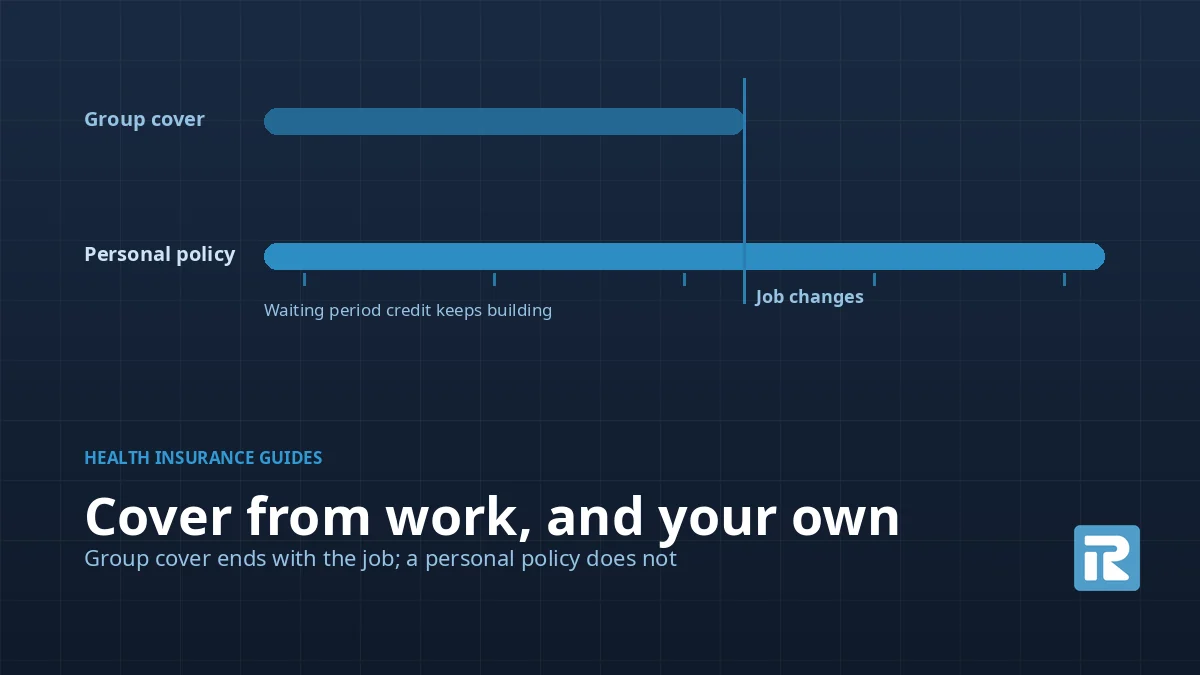
Renewal keeps a policy continuous, which is what preserves the waiting period credit already earned. Portability lets you move to another insurer at renewal while carrying that credit across for the ported sum insured.
Renew on time. A lapse can reset waiting periods that took years to complete, and a family member who has developed a condition in the meantime may find new cover harder to obtain. If you are unhappy with an insurer, porting at renewal is usually a better route than letting the policy lapse and buying a new one.
Common mistakes families make
- Choosing on premium alone. Two policies at similar prices can pay very differently once room rent limits and co-payment apply.
- Not checking the network. Confirm the hospitals you would use in Godhra and Vadodara are on the insurer's list.
- Putting everyone on one floater by default. Older members can use up a shared sum insured quickly.
- Leaving out a medical condition. Non-disclosure is the most avoidable cause of claim disputes.
- Relying only on cover from an employer. It usually ends when the job ends.
- Letting the policy lapse. Waiting period credit is built through continuous cover.
Health insurance for families in Godhra and Panchmahal
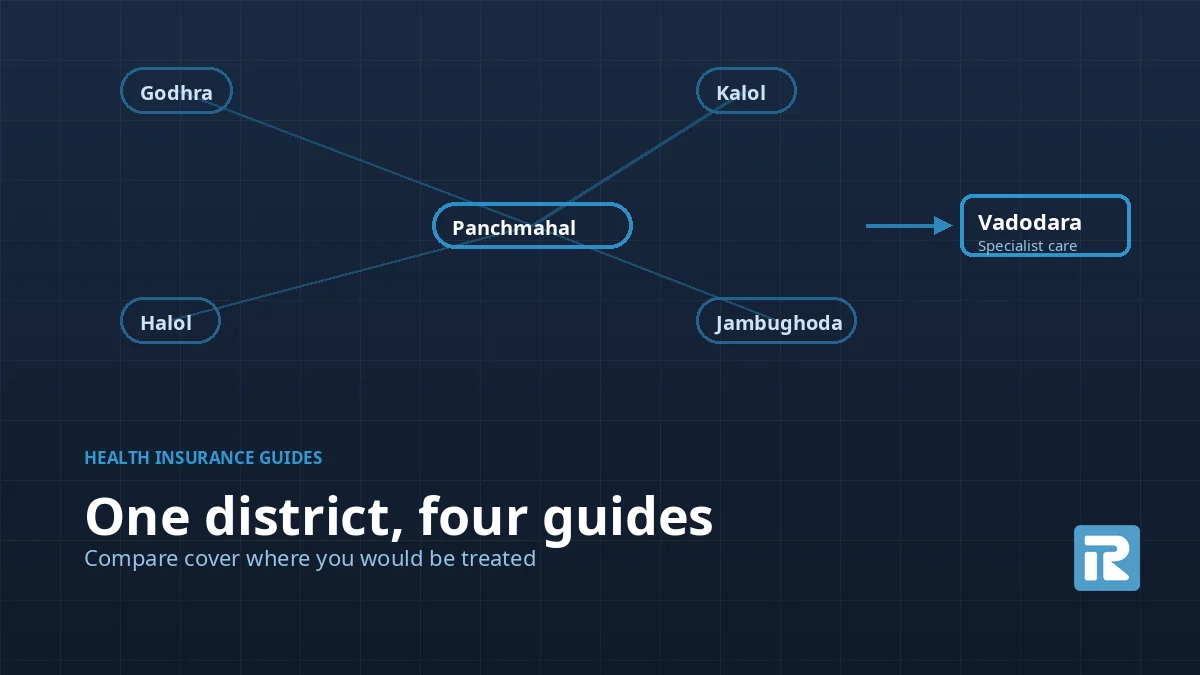
Godhra sits at the centre of Panchmahal district, and many families in the town have relatives in Halol, Kalol, Shehera or the villages around them. When a parent in a nearby taluka needs treatment, the family often brings them to Godhra or takes them on to Vadodara. That is worth remembering when you check networks and set a sum insured for older members.
For the district-wide picture, including how cover works for people in Halol and in the forested areas around Jambughoda, see the guide to health insurance in Panchmahal.
Raulji Group is based in Vadodara and does not have an office in Godhra. People in Godhra can discuss a health insurance requirement with Dharmendrasinh Raulji by WhatsApp or phone. Raulji Group helps people understand and arrange cover; it does not underwrite insurance, and claim decisions rest with the insurer. More on the service is on the insurance services page.
Before you buy, confirm in writing
- Which hospitals in Godhra, and in Vadodara, are in this insurer's cashless network today
- The waiting period for each condition anyone in the family already has
- Whether there is a room rent limit, a co-payment or any sub-limit
- Whether the sum insured is individual or shared, and how much it is
- What is permanently excluded
- How and within what time a claim must be intimated
Frequently asked questions
What is health insurance?
Health insurance is a contract under which an insurer pays the covered medical expenses of the people on the policy, up to the sum insured, mainly for hospital treatment. What it pays is subject to the policy's waiting periods, exclusions and limits.
What is a family floater health insurance policy?
A family floater covers several family members under one shared sum insured. Any member can use the full amount, but one large claim reduces what is left for everyone else for the rest of the policy year.
What is a waiting period in health insurance?
A waiting period is the time from the start of the policy during which certain claims are not payable. Policies usually have an initial waiting period, specific illness waiting periods, and a pre-existing disease waiting period, which cannot exceed 36 months under the IRDAI rules.
Is cashless treatment available at hospitals in Godhra?
Cashless treatment is available at hospitals in your insurer's network, and each insurer's network is different. Check the insurer's current network list for the hospitals you would use in Godhra before buying, and again at renewal.
Does my Godhra policy cover treatment in Vadodara?
Health insurance is not limited to the town where you bought it, so treatment in Vadodara is covered on the same terms. Cashless treatment needs the Vadodara hospital to be in your insurer's network; otherwise you can claim reimbursement.
Can I buy health insurance in Godhra without visiting an office?
Yes. Policies can be compared, proposed and issued without an office visit, and documents can be shared digitally. People in Godhra can discuss their requirement with Dharmendrasinh Raulji of Raulji Group by WhatsApp or phone.
Can I change my health insurer later?
Yes. Portability lets you move to another insurer at renewal while keeping the waiting period credit you have built for the ported sum insured. Start the process before your renewal date and keep the policy continuous.
What should I check before buying a policy?
Check the network hospitals you would use, the waiting periods for existing conditions, any room rent limit, co-payment or sub-limit, the sum insured, the permanent exclusions and the claim procedure. All of these are summarised in the Customer Information Sheet.
Sources
Official sources for the regulatory statements in this article. Each one notes what it supports, so a claim can be checked against it.
- IRDAI Master Circular on Health Insurance Business, 29 May 2024Cashless authorisation within one hour and final discharge authorisation within three hours; the Customer Information Sheet.
- IRDAI (Insurance Products) Regulations, 2024Maximum pre-existing disease waiting period of 36 months and the 60-month moratorium.
- Council for Insurance OmbudsmenThe Insurance Ombudsman as the route for complaints an insurer does not resolve.
Disclaimer. This article is for general information only and is not insurance advice or a recommendation of any insurer or product. Policy terms, network hospitals and regulations change and vary between products. Read the Customer Information Sheet and policy wording, and confirm current terms with the insurer before deciding. Raulji Group does not underwrite insurance; claim decisions rest with the insurer.
Written by
Dharmendrasinh Raulji
Dharmendrasinh Raulji is Chairman of Raulji Group and handles its insurance advisory enquiries directly.