What this article covers
- How employer group health cover works, and why it usually ends with the job
- Where ESI fits for employees who are covered by it
- Individual, family and senior citizen cover alongside workplace cover
- Group health cover for business owners on the Halol industrial estate
- Network hospitals, cashless treatment, waiting periods and claims
- The questions to ask before buying any policy
Quick answer
Is health cover from my employer in Halol enough? Group cover from an employer is useful, but it is tied to the job and usually ends when employment ends, often without the waiting period credit a personal policy would have built. Many employees in Halol therefore hold a personal or family policy alongside group cover. Before relying on either, check the sum insured, which family members are included, the network hospitals near Halol and in Vadodara, and any room rent limit or co-payment.
- Group health insurance is arranged by an employer for its employees and sometimes their dependants. Its terms are set by the employer's policy, not by you.
- ESI is a separate statutory scheme administered by ESIC. It is not a private health insurance policy.
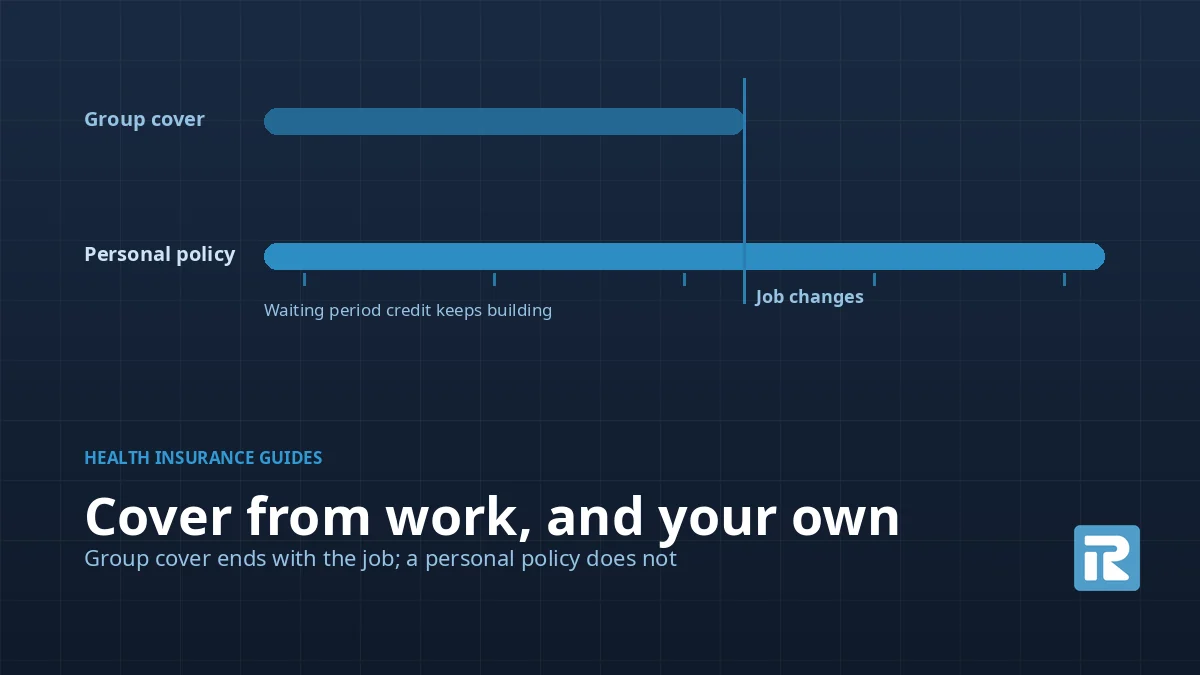
- A personal policy builds waiting period credit that stays with you when you change jobs.
- Under the IRDAI rules, the pre-existing disease waiting period in a health insurance policy cannot exceed 36 months.
Halol is one of Panchmahal district's main industrial towns, built around a large GIDC estate with automobile manufacturing as its most visible anchor. Many people in the town work on the estate or for the businesses that supply it, which means many households may already have some health cover through an employer. That makes health insurance in Halol a slightly different question from the one families face elsewhere in the district.
The question here is usually not whether to have cover at all, but whether the cover from work is enough, who it includes, and what happens to it if the job changes. This guide starts from that question, then covers individual, family and senior citizen policies, and what a business owner in Halol should know about group cover for employees.
No insurer or product is recommended here. The terms used below, from waiting periods to co-payment, are explained in full in the guide to health insurance in India.
How does employer group health insurance work?
Group health insurance is a single policy that an employer buys to cover its employees, and often their spouses, children or parents. The employer chooses the insurer, the sum insured and the terms. The cover applies only while the person is an employee.
Group policies often have features that individual policies do not, which is why they are valuable. Depending on the terms the employer has negotiated, they may cover pre-existing conditions from the first day and may not apply the waiting periods found in individual policies. They also cost the employee little or nothing.
The limitation is that the employee does not control any of it. The employer can change the insurer, the sum insured or the family members covered at renewal. And when employment ends, through resignation, retirement or a change of job within the estate, the group cover usually ends with it.
Some insurers allow a group policyholder to move to an individual policy when leaving, on conditions set by the insurer. If your employer's policy offers this, ask HR or the insurer for the terms before you leave, not after.
| Question | Employer group cover | Personal or family policy |
|---|---|---|
| Who chooses the terms | The employer | You |
| Who pays the premium | Usually the employer, sometimes shared | You |
| When it ends | Usually when the job ends | Only if you stop renewing it |
| Waiting period credit | Tied to the group policy | Stays with you between jobs |
| Family members covered | As the employer decides | As you decide, within the insurer's rules |
Where does ESI fit?
The Employees' State Insurance scheme is a statutory social security scheme administered by the Employees' State Insurance Corporation. It covers employees of establishments that fall under the ESI Act, within the wage limit the scheme sets, and provides medical care through ESI dispensaries and hospitals.
ESI is not a private health insurance policy. It has its own rules on eligibility, contributions, the facilities you can use and how treatment is provided. Whether you are covered depends on your employer, your wages and the scheme's current limits, all of which are published by ESIC.
If you are covered by ESI, check which facilities serve Halol and what they provide before deciding what else you need. Some families hold a private policy as well, so that they have a choice of hospital. Others rely on ESI alone. It is a choice to make knowing what each provides.
Individual and family cover alongside work
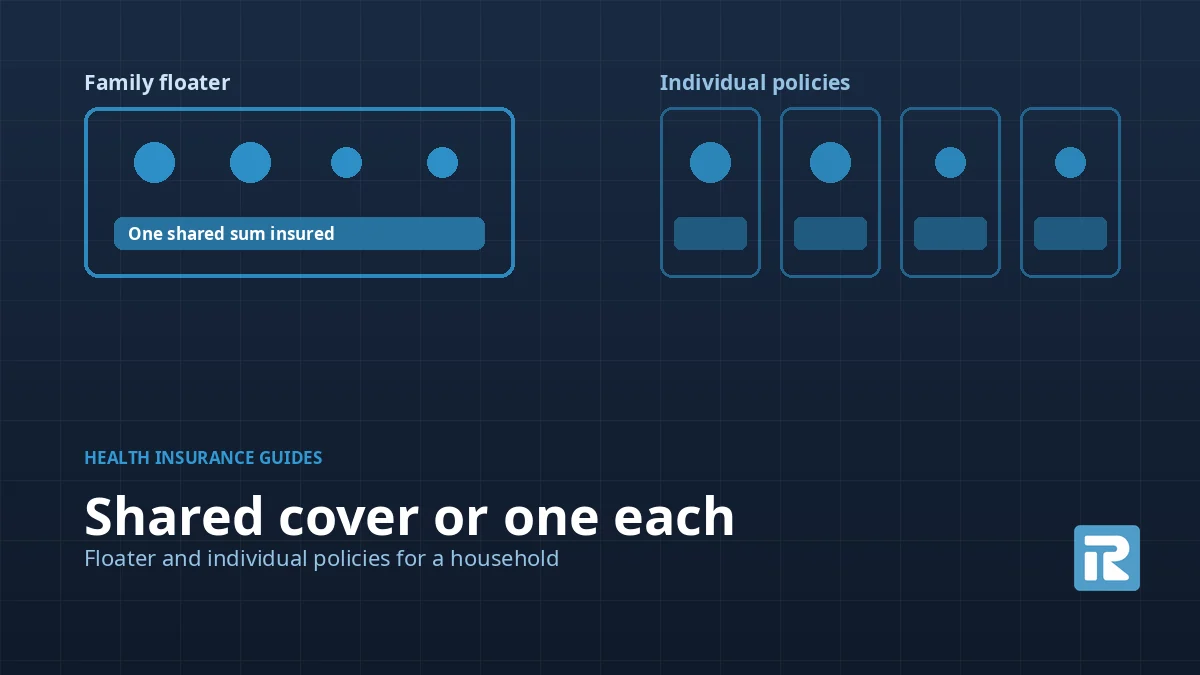
An individual policy covers one person. A family floater covers several family members under one shared sum insured. Either can be held alongside employer cover, and when both apply, a claim can generally be made under the policy you choose, subject to the terms of each.
For an employee in Halol, a personal policy does two jobs. It covers family members the employer's policy leaves out, such as parents. And it builds waiting period and moratorium credit that belongs to you and survives a change of job.
Some people choose a modest base policy and keep the group cover for larger claims while it lasts. Others buy a policy that would be adequate on its own, so that losing the job does not leave the family under-insured. Which approach suits you depends on how secure the employment is, the family's health history and the budget.
Health insurance for parents and senior citizens
Senior citizens can buy health insurance, and the IRDAI rules no longer set an upper age limit for buying a policy. Premiums are higher at older ages, pre-existing conditions are more likely, and policies for older people often carry co-payment.
Parents are often the members of a Halol household who need cover most and have it least, because many group policies do not include them or limit their cover. When comparing policies for a parent, the pre-existing disease waiting period and any co-payment usually matter more than the headline sum insured.
Accurate disclosure matters even more at older ages. Declare every diagnosis and every regular medicine on the proposal form. A higher premium or a specific waiting period is a known cost; a disputed claim is not.
Group health insurance for businesses in Halol
A business can buy a group health policy for its employees. The business chooses the sum insured, who is covered and the main terms, within what the insurer offers. Group policies usually need a minimum number of members, which the insurer sets.
For a supplier, contractor or service business on the Halol estate, group cover can help with hiring and retention, especially where larger employers nearby offer it. The decisions are practical ones: whether to include spouses, children or parents, whether to set a room rent limit to control the premium, and how claims will be handled for employees who are not familiar with insurance.
Whether ESI applies to your establishment is a separate statutory question, and group health insurance does not replace any ESI obligation. Raulji Group's insurance services cover health and group cover for employees as well as other business insurance.
Network hospitals and cashless treatment near Halol
Cashless treatment is available only at hospitals in the insurer's network, where the insurer settles the covered bill directly. Outside the network, you pay first and claim reimbursement.
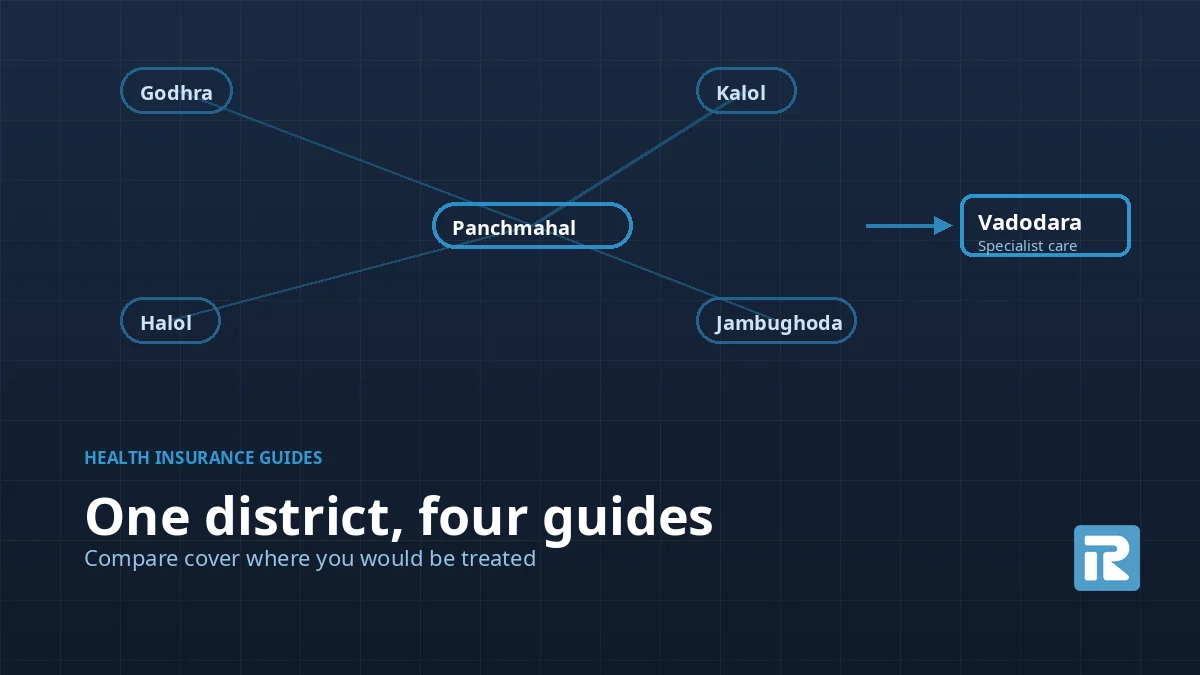
Halol is close to Vadodara, and many people from the town go there for specialist care. When you check a network, check both the hospitals you would use in Halol and those you would use in Vadodara. If you have group cover and a personal policy, check both insurers' networks: they are often different.
Whichever policy you use, the IRDAI Master Circular on Health Insurance Business gives the insurer one hour to decide a cashless request, and three hours to authorise discharge once the hospital asks.
Waiting periods, pre-existing conditions and exclusions
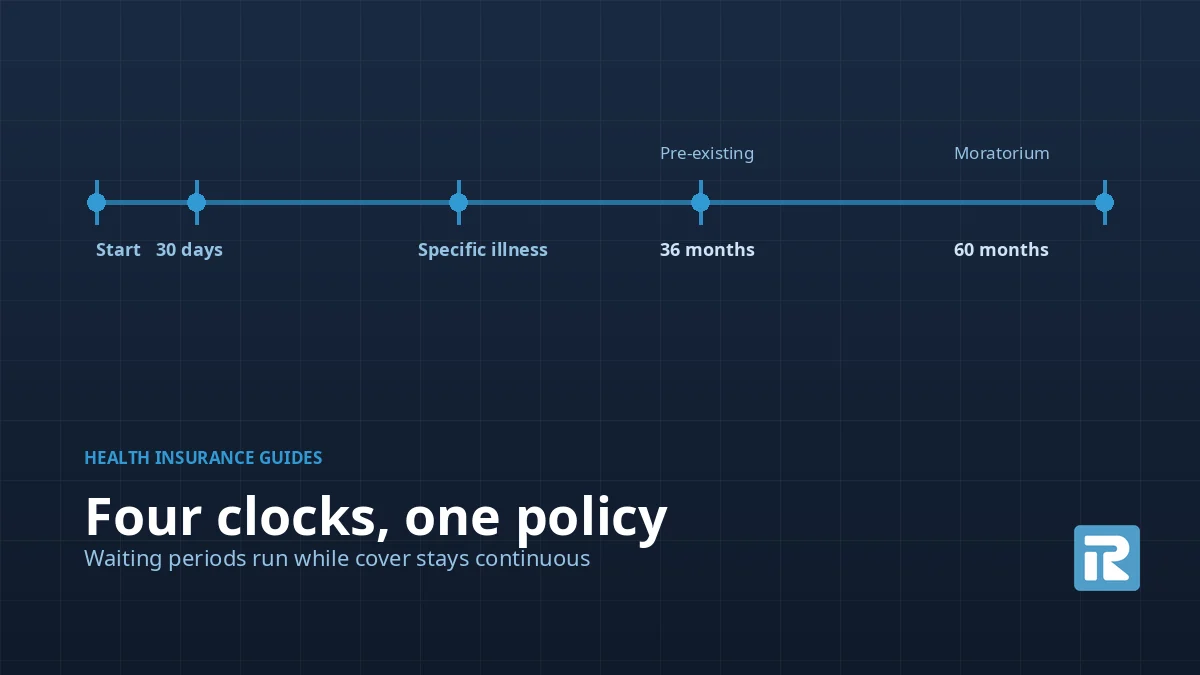
Individual and family policies apply waiting periods: an initial period, usually 30 days, specific illness waiting periods for named conditions, and a pre-existing disease waiting period of up to 36 months. After 60 continuous months of cover, the moratorium applies and the policy cannot be contested on grounds of non-disclosure, except where fraud is established.
Every policy also lists permanent exclusions, and most limit some categories of expense such as non-medical consumables. Room rent limits, co-payment and sub-limits reduce what an accepted claim pays. Each of these is set out in the Customer Information Sheet, which is the quickest way to compare two policies.
For a detailed walk-through of how waiting periods run and how a claim is settled, see the guide to health insurance in Kalol, Panchmahal, which covers both step by step.
Making a claim when you have more than one policy
If you have group cover and a personal policy, decide which to claim under before admission where you can, and tell the hospital. Many people claim first under group cover while they have it, which keeps the personal policy's no-claim bonus intact, but the right choice depends on the terms of both policies.
Where one claim exceeds the sum insured of the first policy, the balance can generally be claimed under the second, subject to its terms. Keep certified copies of bills and the discharge summary when the originals go to the first insurer.
Renewal and portability
Renew a personal policy on time, every year. Continuous cover is what earns waiting period and moratorium credit, and a lapse can reset it. If you want to change insurer, portability lets you move at renewal and carry the credit for the ported sum insured. Start the process well before the renewal date.
Questions to ask before choosing a policy in Halol
Ask, and get the answers in writing
- If I have group cover, who exactly does it include, and what is the sum insured?
- What happens to my group cover if I leave this job, and can I move to an individual policy?
- Am I covered by ESI, and which facilities serve Halol?
- Which hospitals in Halol and Vadodara are in this insurer's network today?
- What is the waiting period for each condition my family already has?
- Is there a room rent limit, co-payment or sub-limit?
- What is permanently excluded?
For how cover works across the rest of the district, from Godhra to the smaller talukas, see the guide to health insurance in Panchmahal.
Raulji Group works from Vadodara and has no office in Halol. Employees, families and business owners in Halol can talk through personal or group cover with Dharmendrasinh Raulji on WhatsApp or by phone. Raulji Group helps people understand and arrange cover but does not underwrite it; the insurer decides every claim.
Frequently asked questions
I have health cover from my employer in Halol. Do I need my own policy?
Not necessarily, but many employees hold one. Group cover usually ends with the job and is controlled by the employer. A personal policy covers family members the group policy leaves out and builds waiting period credit that stays with you if you change jobs.
Is ESI the same as health insurance?
No. ESI is a statutory social security scheme administered by the Employees' State Insurance Corporation for employees of covered establishments within its wage limit. It provides medical care through its own system and has its own rules. A private health insurance policy is a separate contract with an insurer.
What happens to group health insurance when I leave my job?
Group cover usually ends when employment ends. Some insurers allow a departing employee to move to an individual policy on conditions they set. Ask HR or the insurer about this before you leave.
Can I claim under two health insurance policies?
Generally, yes. You can choose which policy to claim under, and if one policy's sum insured is exhausted, the balance can be claimed under the other, subject to the terms of each.
Can my parents get health insurance at an older age?
Yes. The IRDAI rules no longer set an upper age limit for buying health insurance. Premiums are higher at older ages, and policies may carry co-payment and waiting periods for existing conditions.
What is cashless hospitalisation?
Cashless hospitalisation means the insurer settles the covered hospital bill directly with a network hospital. It requires authorisation from the insurer, which under the IRDAI rules must be decided within one hour of the request.
Can a small business in Halol buy group health insurance for its staff?
Yes. A business can buy a group health policy for its employees, subject to the minimum group size and terms the insurer sets. It does not replace any ESI obligation that applies to the establishment.
Sources
Official sources for the regulatory statements in this article. Each one notes what it supports, so a claim can be checked against it.
- IRDAI Master Circular on Health Insurance Business, 29 May 2024Cashless authorisation timelines and policyholder entitlements.
- IRDAI (Insurance Products) Regulations, 2024Maximum pre-existing disease waiting period of 36 months, the 60-month moratorium, and the removal of the upper age limit for buying health insurance.
- Employees' State Insurance CorporationEligibility, wage limits and benefits under the ESI scheme.
Disclaimer. This article is for general information only and is not insurance advice or a recommendation of any insurer or product. Group policy terms are set by each employer and insurer, and ESI rules are set by ESIC. Read the Customer Information Sheet and policy wording, and confirm current terms before deciding. Raulji Group does not underwrite insurance; claim decisions rest with the insurer.
Written by
Dharmendrasinh Raulji
Dharmendrasinh Raulji is Chairman of Raulji Group and handles its insurance advisory enquiries directly.