What this article covers
- The basics: individual, family floater and senior citizen policies, and the sum insured
- How each waiting period runs, with a worked timeline for a family
- How pre-existing diseases are handled, and why disclosure decides so much
- Co-payment, room rent limits and exclusions
- Cashless and reimbursement claims, step by step, and the documents to keep
- What to do if a claim is refused, and how renewal and portability protect your credit
Quick answer
What decides whether a health insurance claim is paid? Three things decide most outcomes: whether the condition is past its waiting period, whether it was disclosed when the policy was bought, and whether the claim follows the policy's procedure. A waiting period runs from the start of continuous cover, up to 36 months for pre-existing diseases under the IRDAI rules. A claim is cashless at a network hospital with the insurer's authorisation, or by reimbursement elsewhere, with documents submitted within the policy's time limit.
- This guide is about Kalol in Panchmahal district, near Halol. The policy terms it explains apply in the same way anywhere in Gujarat.
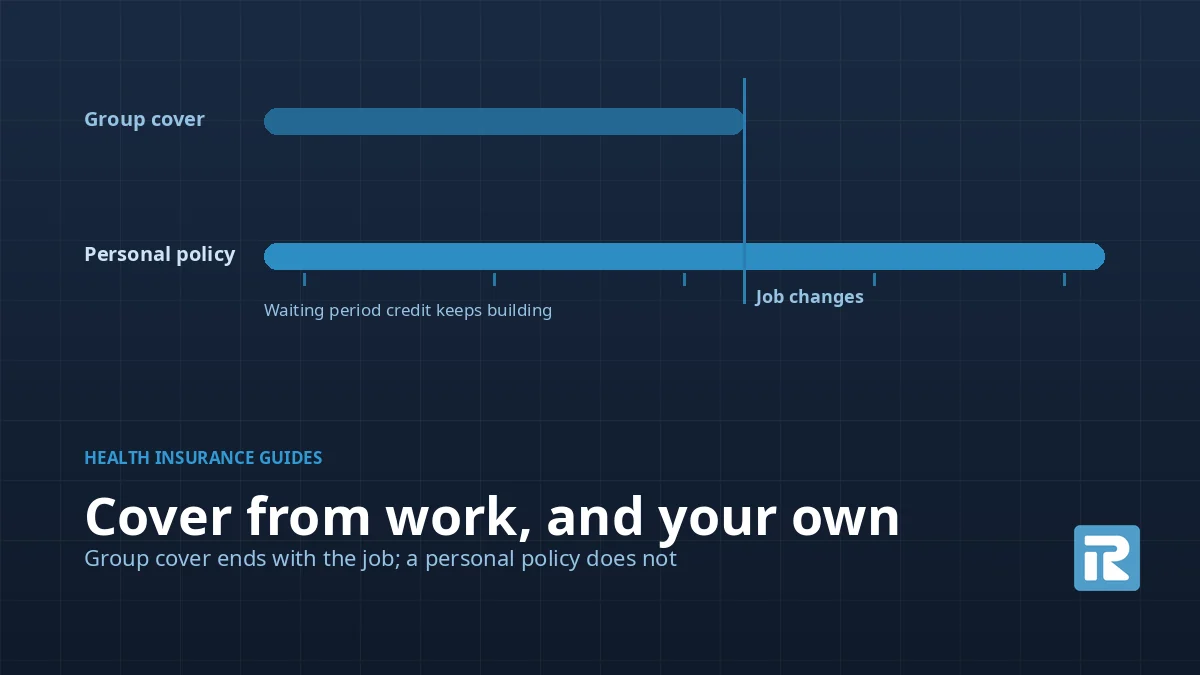
- Waiting periods run on continuous cover. A lapse can reset them; portability carries them across to a new insurer.
- After 60 continuous months of cover, a policy cannot be contested for non-disclosure except where fraud is established.
- A refused claim can be challenged: first with the insurer's grievance process, then with the Insurance Ombudsman.
There are two towns called Kalol in Gujarat. This guide is about Kalol in Panchmahal district, the taluka town close to Halol. If you are in Kalol in Gandhinagar district, everything here about policies, waiting periods and claims applies to you in exactly the same way; only the local hospitals differ.
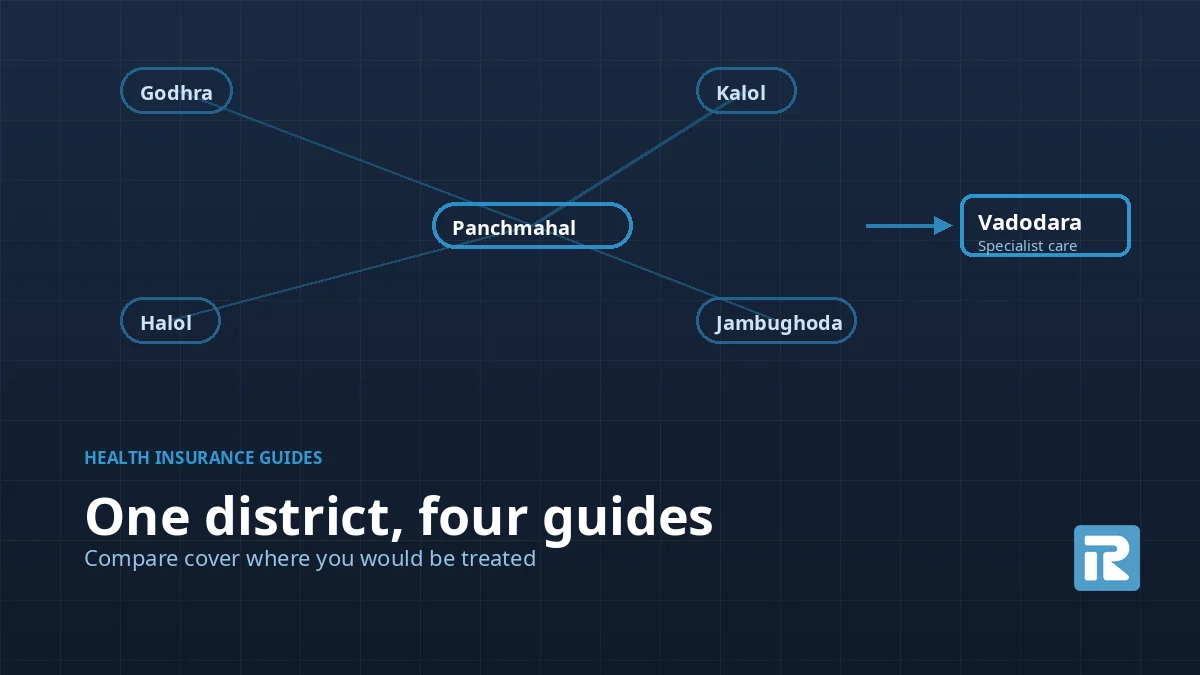
Families in Kalol typically look to hospitals in Kalol itself, in Halol and Godhra, and in Vadodara for specialist care. This guide covers the basics of choosing a policy, then goes into more detail than most on the two things that decide whether that policy pays when it is needed: waiting periods and claims.
Nothing here is a recommendation of an insurer or product. If you want every policy term explained, including the Customer Information Sheet, read understanding health insurance waiting periods, exclusions and limits in the India guide.
Health insurance basics for a Kalol family
Health insurance pays the covered costs of hospital treatment for the people named on the policy, up to the sum insured, subject to waiting periods, exclusions and limits. Most policies also cover expenses shortly before and after an admission, and day care procedures.
Individual, family floater and senior citizen policies
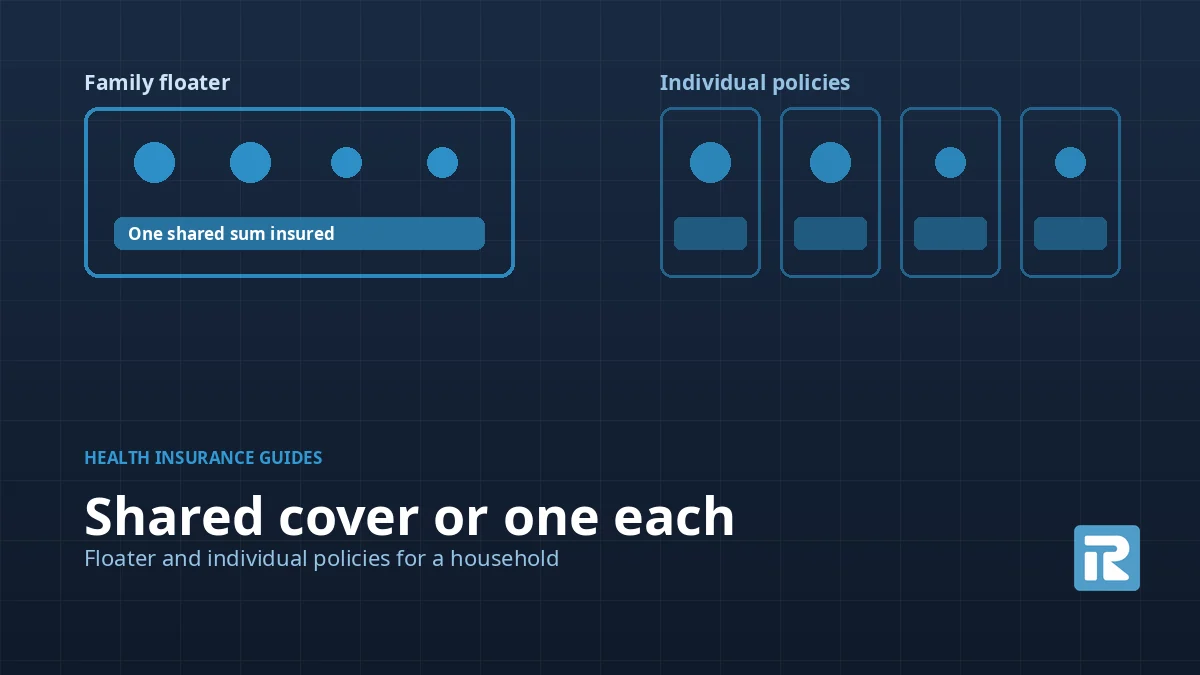
An individual policy gives one person a sum insured of their own. A family floater shares one sum insured across the family, which is usually cheaper but means one large claim reduces what is left for everyone. Policies designed for senior citizens are priced and structured for older buyers, often with co-payment. The IRDAI rules no longer set an upper age limit for buying health insurance, so older parents can be covered.
Sum insured
The sum insured is the most the policy pays in a year. Set it against what one serious admission would cost at the hospital you would actually use, which for complex treatment may be in Vadodara rather than locally. On a floater, the same amount must cover every member for the whole year.
How do health insurance waiting periods work?
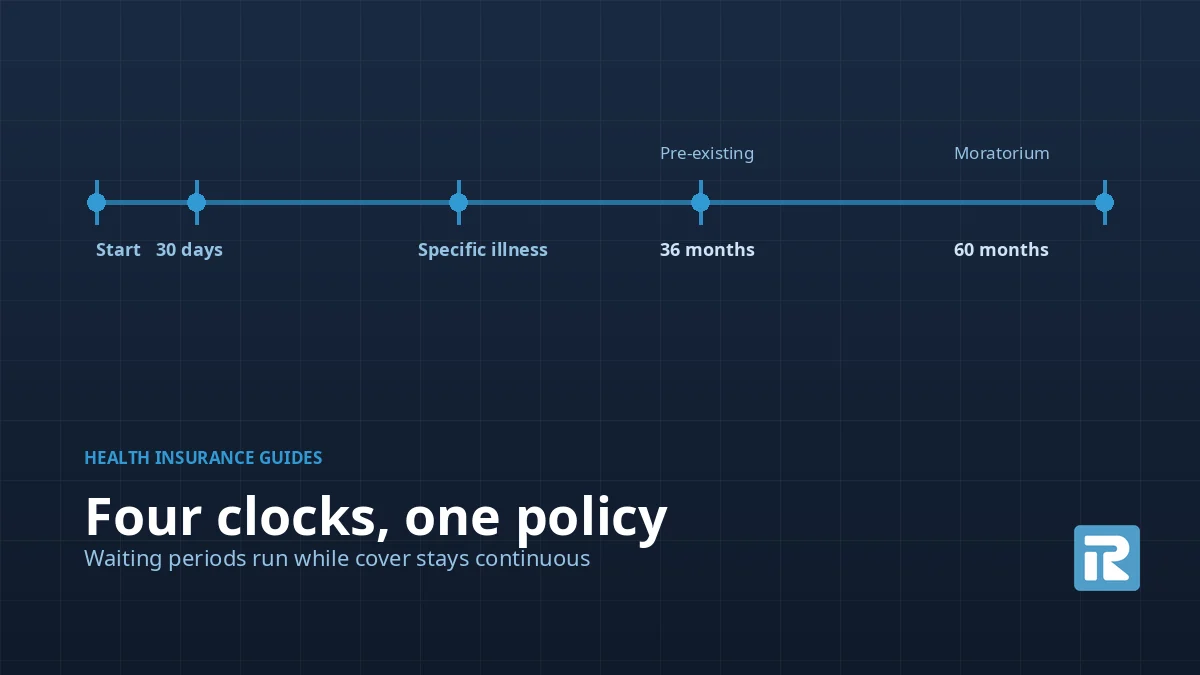
A waiting period is a stretch of time from the start of a policy during which certain claims are not payable. Each kind of waiting period runs from the date continuous cover began, and once it is completed, claims for the conditions it covers become payable on the policy's normal terms.
| Waiting period | Usual length | What it means |
|---|---|---|
| Initial | Commonly the first 30 days | Only accidental injuries are covered. Illness claims start after this period. |
| Specific illness | Set by each policy for named conditions | Listed conditions and procedures, often including cataract, hernia and joint replacement, are not covered until the period ends. |
| Pre-existing disease | Up to 36 months under the IRDAI rules | Treatment for conditions you had before cover began is not covered until the period ends. |
| Moratorium | 60 continuous months | After this, the policy cannot be contested for non-disclosure or misrepresentation, except where fraud is established. |
Waiting periods are the main reason to buy health insurance before it is needed. A policy bought in the year a condition is diagnosed will not cover that condition for some time. A policy held for years has already completed its waiting periods.
Pre-existing diseases and disclosure
A pre-existing disease is generally a condition diagnosed or treated before the policy started, as defined in the policy wording. It must be declared on the proposal form. Once declared, it is covered after the pre-existing disease waiting period.
Disclosure decides more claims than any other single factor. A condition that was declared is subject to a known waiting period. A condition that was not declared gives the insurer grounds to question any related claim on the basis that the policy was issued on incorrect information.
Co-payment, room rent limits and exclusions
A co-payment is a share of each claim you pay yourself, usually a percentage. A room rent limit caps the category of room the policy pays for, and choosing a more expensive room can reduce what is payable on related charges across the bill. A sub-limit caps what is paid for a particular treatment. Permanent exclusions are treatments the policy never covers.
These terms affect claims that the insurer has accepted. They are the most common reason a family is surprised by the amount payable at discharge, even when the claim itself went through without difficulty.
How does a health insurance claim work?
A claim is either cashless or by reimbursement. A cashless claim is settled by the insurer directly with a network hospital after it authorises the treatment. A reimbursement claim is made after you have paid the hospital, by submitting the claim form and documents to the insurer.
Cashless claims at a network hospital
- 1
Confirm the hospital is in the network
Check the insurer's current list. Hospitals in Kalol, Halol, Godhra and Vadodara may each be in one insurer's network and not another's.
- 2
Request authorisation
For a planned admission, the hospital's insurance desk sends a pre-authorisation request with your policy details. For an emergency, inform the insurer within the time the policy specifies.
- 3
Authorisation decision
Under the IRDAI Master Circular on Health Insurance Business, the insurer must decide on a cashless request within one hour.
- 4
Discharge
The insurer must give final authorisation within three hours of the hospital's discharge request. You pay anything not covered, such as co-payment or amounts above a limit.
Reimbursement claims
- 1
Inform the insurer
Intimate the claim within the time the policy specifies, even if you are paying the hospital yourself.
- 2
Collect the documents
The discharge summary, itemised final bill, payment receipts, prescriptions, investigation reports and the claim form. Keep copies of everything you send.
- 3
Submit within the time limit
Send the claim within the period stated in the policy, and get an acknowledgement.
- 4
Respond to queries
If the insurer asks for more information, respond in writing and keep a record.
Mistakes that lead to claim problems
- Claiming for a condition still inside its waiting period. Check the dates before a planned admission, not after.
- Reporting an emergency admission late. Each policy states a time limit; family members accompanying the patient often do not know it.
- Choosing a room above the policy's limit. It can reduce what is payable on related charges, not only the room rent.
- Sending incomplete documents. A missing discharge summary or an unitemised bill is a common reason a reimbursement claim stalls.
- Not keeping copies. If originals go missing, copies with a dated record of when they were sent are your evidence.
What can you do if a claim is refused?
Ask the insurer for the reason in writing, with the policy clause it relies on. If you disagree, complain through the insurer's grievance process. If that does not resolve it, you can approach the Insurance Ombudsman.
Many disputes come from a waiting period that had not been completed, a condition the insurer believes was not disclosed, or a limit in the policy. Knowing which clause is involved tells you whether there is a case to make. IRDAI also runs the Bima Bharosa grievance portal for complaints against insurers. For complaints from Gujarat, the Insurance Ombudsman office in Ahmedabad has jurisdiction; its current address and process are on the Council for Insurance Ombudsmen website.
Renewal and portability
Every waiting period in this guide depends on continuous cover. Renew on time each year. If you want to change insurer, use portability at renewal, which carries the credit you have earned for the ported sum insured across to the new policy. Start the process well before the renewal date.
For the rest of the district, including employer cover in Halol and family cover in Godhra, see the guide to health insurance across Panchmahal.
Raulji Group operates from Vadodara, with no office in Kalol. If you are in Kalol and want to go through a policy's waiting periods before buying, or are unsure what to do about a claim, you can contact Dharmendrasinh Raulji on WhatsApp or by phone. Raulji Group helps with understanding and arranging cover; insurers underwrite the policies and decide the claims. The insurance services page sets out what Raulji Group covers.
Frequently asked questions
Which Kalol is this guide about?
Kalol in Panchmahal district, near Halol. Gujarat also has a Kalol in Gandhinagar district. The policy terms, waiting periods and claim processes in this guide apply in the same way in both.
How does health insurance work?
You pay a premium, and the insurer pays the covered costs of hospital treatment for the people on the policy, up to the sum insured, subject to waiting periods, exclusions and limits. Claims are settled directly with network hospitals or reimbursed after you pay.
What is a pre-existing disease?
Generally a condition diagnosed or treated before the policy started, as defined in the policy. It must be declared on the proposal form and is covered after the pre-existing disease waiting period, which cannot exceed 36 months under the IRDAI rules.
Does a waiting period restart if I change insurer?
Not if you port. Portability at renewal carries the waiting period credit you have earned across to the new insurer for the ported sum insured. Letting a policy lapse and buying a new one can restart it.
What documents are needed for a reimbursement claim?
Usually the claim form, discharge summary, itemised final bill, payment receipts, prescriptions and investigation reports, plus identity and policy details. The policy lists exactly what is required and the time limit for submitting it.
What can I do if my health insurance claim is rejected?
Ask for the reason in writing with the policy clause relied on, then use the insurer's grievance process. If that does not resolve it, approach the Insurance Ombudsman. The office in Ahmedabad handles complaints from Gujarat.
Is cashless treatment available in Kalol?
Cashless treatment is available at hospitals in your insurer's network. Check the insurer's current network list for hospitals in Kalol and the places you would go for specialist care, such as Halol, Godhra or Vadodara.
Sources
Official sources for the regulatory statements in this article. Each one notes what it supports, so a claim can be checked against it.
- IRDAI Master Circular on Health Insurance Business, 29 May 2024Cashless authorisation within one hour and final discharge authorisation within three hours.
- IRDAI (Insurance Products) Regulations, 2024Maximum pre-existing disease waiting period of 36 months, the 60-month moratorium and the removal of the upper age limit for buying health insurance.
- Bima Bharosa, IRDAI grievance portalRegistering and tracking a complaint against an insurer.
- Council for Insurance OmbudsmenInsurance Ombudsman offices, their jurisdictions, including Ahmedabad for Gujarat, and the complaint process.
Disclaimer. This article is for general information only and is not insurance advice or a recommendation of any insurer or product. Waiting periods, limits and claim procedures vary between products and regulations change. Read the Customer Information Sheet and policy wording, and confirm current terms with the insurer before deciding. Raulji Group does not underwrite insurance; claim decisions rest with the insurer.
Written by
Dharmendrasinh Raulji
Dharmendrasinh Raulji is Chairman of Raulji Group and handles its insurance advisory enquiries directly.