Understand the process, the information required and the obligations that follow before you incorporate. We prepare the documents and handle the MCA filings.
What it is. A Private Limited Company is a company incorporated under the Companies Act, 2013. It is a separate legal entity from its shareholders, who are liable only up to the amount unpaid on the shares they hold.
Typical timeline: commonly 7 to 12 working days from receipt of complete documents. Estimated timelines can vary depending on documentation, government processing and other factors outside our control.
Quick answer
What is a Private Limited Company?
A Private Limited Company is a company incorporated under the Companies Act, 2013. It is a separate legal entity, so the company owns its assets and owes its debts, and shareholders are liable only for any amount unpaid on their shares. Registering one means reserving a name and filing the SPICe+ incorporation form with the Registrar of Companies on the MCA portal, which issues a Certificate of Incorporation on approval.
Key takeaways
Needs at least two directors and two shareholders. The same two people can be both.
The only one of the four structures that can issue equity shares to investors.
Carries the heaviest annual compliance, including a statutory audit from the first year.
Incorporation is filed online, so it can be done from anywhere in India.
How it is structured
Who owns a Private Limited Company, who runs it, and who carries the risk
Registering a Private Limited settles three things at once: who owns the business, who is responsible for running it, and how far personal liability reaches if something goes wrong. Eligibility, documents and annual compliance all follow from that.
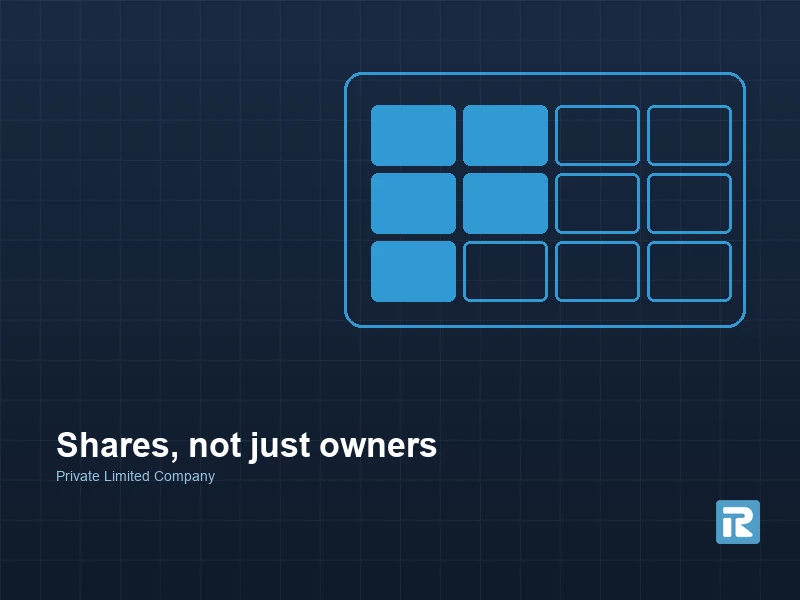
Directors run it. Shareholders own it. The two can be the same people.
SHAREHOLDERS
LIABILITY SHIELD
Private Limited Company
Separate legal entity
Liability limited to unpaid share capital
Is it right for you?
Who should choose Private Limited, and where it may not fit.
Worth weighing before you commit, because changing structure later is not free.
A good fit for
Founders who intend to raise equity funding from angel investors or venture capital
Businesses that want shareholding to be transferable without dissolving the business
Teams building a business meant to continue independently of any one owner
Companies that need a formal board structure for customers, lenders or tenders
Startups planning to register under Startup India or issue ESOPs to employees
!Where it may not fit
Higher ongoing compliance than an LLP, a partnership firm or a proprietorship
Statutory audit is required from the first financial year regardless of turnover
Annual ROC filings, board meetings and minutes must be maintained on record
Withdrawing profits requires a formal route such as salary, dividend or board-approved fees
The company can own property, borrow, sue and be sued in its own name. Its assets and obligations are legally distinct from those of its shareholders.
Limited liability
A shareholder's liability is limited to any amount remaining unpaid on their shares. Personal assets are not exposed to the company's business debts, subject to the exceptions in law.
Perpetual succession
The company continues to exist regardless of changes in shareholding, the death of a member, or the exit of a director, until it is formally wound up or struck off.
Preferred by investors
Equity shares can be issued and transferred, which makes the structure workable for priced rounds, convertible instruments and ESOP pools. LLPs and partnership firms cannot issue equity.
Credibility with counterparties
Incorporation details, directors and charges are on the public MCA register, which many banks, large customers and tender processes expect to be able to verify.
Eligibility
What you need to qualify.
1A minimum of two directors and two shareholders. The same people can be both.
2At least one director must be a resident of India, meaning a stay of 182 days or more in the previous calendar year.
3A maximum of 200 shareholders, excluding present and former employees holding shares.
4There is no minimum paid-up capital requirement under the Companies Act, 2013.
5A registered office address in India with valid proof and, where the premises are not owned, a no-objection certificate from the owner.
6A proposed name that is not identical or deceptively similar to an existing company, LLP or registered trade mark.
Requirements vary with the people involved and the premises. We confirm the exact list before anything is prepared.
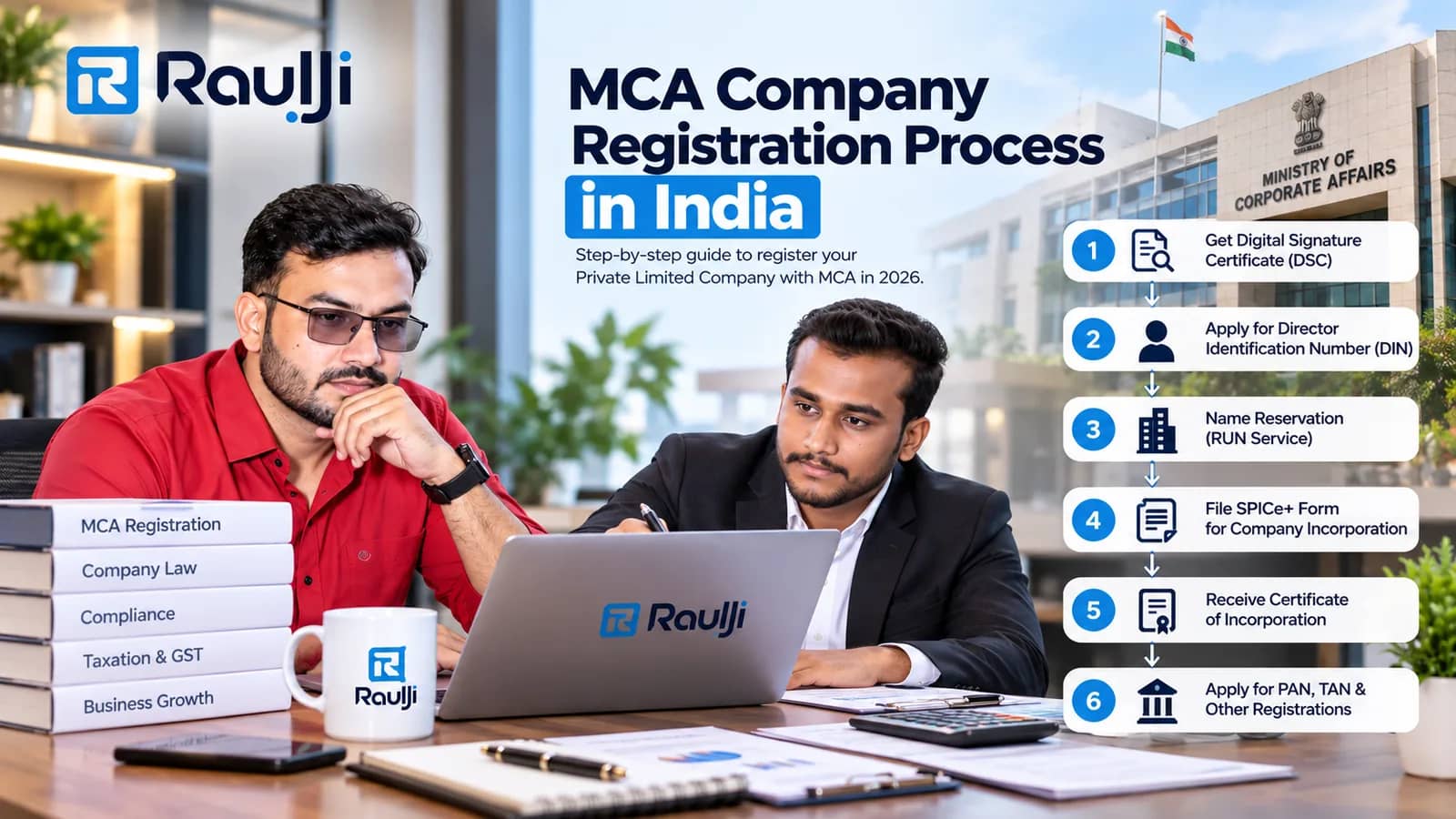
6 stages, what happens at each, and who acts. Select a step to see the detail.
STEP 1 OF 6 · RAULJI GROUP ARRANGES
Digital Signature Certificate (DSC)
Every proposed director and subscriber needs a Class 3 DSC, because MCA forms are signed digitally. We arrange issuance including the video and Aadhaar-based verification the certifying authority requires.
STEP 2 OF 6 · REGISTRAR DECIDES
Name reservation
The proposed name is applied for through Part A of the SPICe+ form. We run availability and trade mark checks first and prepare a second preference, since the Registrar can reject a name that is too similar to an existing entity or mark.
STEP 3 OF 6 · RAULJI GROUP DRAFTS
Drafting the MOA and AOA
The Memorandum of Association sets out what the company is permitted to do, and the Articles of Association set out how it is governed internally. Both are filed electronically as eMOA (INC-33) and eAOA (INC-34).
STEP 4 OF 6 · RAULJI GROUP FILES
SPICe+ Part B filing
The incorporation application covers directors, subscribers, share capital and the registered office. It is filed together with AGILE-PRO-S, which handles the linked PAN, TAN, EPFO, ESIC and bank account applications.
STEP 5 OF 6 · REGISTRAR ISSUES
Certificate of Incorporation
On approval the Registrar issues the Certificate of Incorporation carrying the CIN, along with the company's PAN and TAN. The company legally exists from the date on that certificate.
STEP 6 OF 6 · YOU, WITH OUR GUIDANCE
Post-incorporation steps
A current account is opened, the subscription money is brought in, Form INC-20A is filed to declare commencement of business within 180 days, and the board appoints the first auditor within 30 days of incorporation.
Timeline
How long does registration take?
Commonly 7 to 12 working days from receipt of complete documents.
An estimate, not a commitment. Estimated timelines can vary depending on documentation, government processing and other factors outside our control.
Our part
Digital signatures, name screening, drafting and filing. This starts once every document is complete, and incomplete documents are the most common cause of delay.
The authority’s part
Name approval and incorporation are processed by the Registrar. A query or a name rejection adds a round trip that nobody outside the Registrar can shorten.
What we handle
Every filing, from signature to certificate.
DSC issuance for directors and subscribers
Name availability and trade mark screening before filing
SPICe+ Part A name reservation
Drafting the MOA and AOA for your business objects
SPICe+ Part B incorporation filing with AGILE-PRO-S
PAN and TAN application through the incorporation form
Responding to Registrar queries or resubmission requests
Guidance on bank account opening, INC-20A and first auditor appointment
What you provide
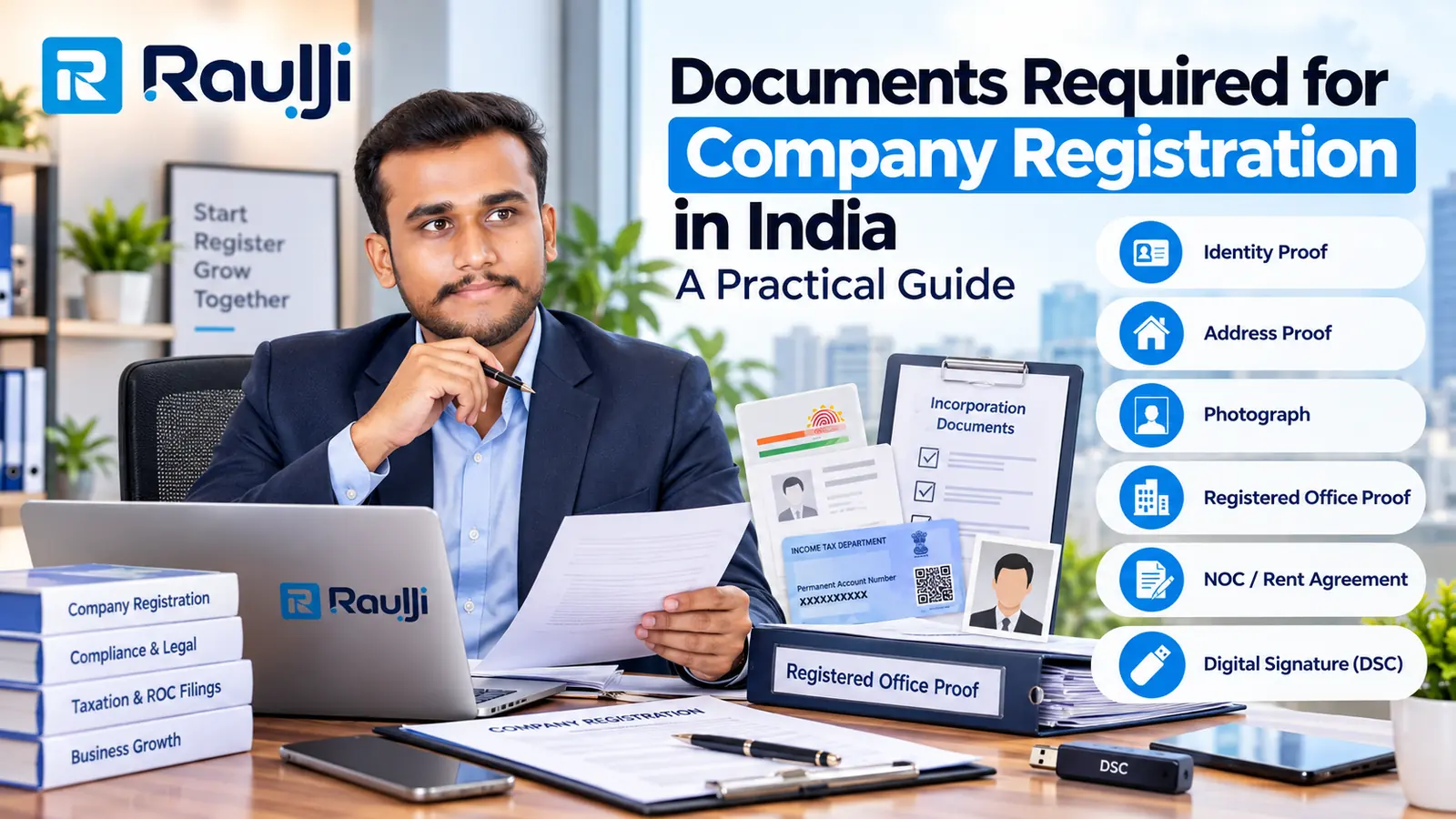
Identity and address documents for every director and shareholder
The proposed company name, with a second option
A short description of what the company will do, for the object clause
The proposed shareholding and authorised capital
Registered office proof and the owner's no-objection certificate
Time for DSC video verification and for signing the forms
Pricing
What makes up the total.
Two kinds of money are involved: our professional fee, and the government and state charges we do not set. Nothing on this page is an all-inclusive price.
Professional feeSet by Raulji Group
₹9,999, one time, for the work listed in the package.
Government filing feesSet by Ministry of Corporate Affairs
Depend on the authorised share capital. Paid to the MCA at filing.
Stamp dutySet by State government
Payable on the MOA and AOA at the rate of the state where the registered office is. Varies with capital.
TaxesSet by As applicable
Any tax that applies to the professional fee is shown in the written quote.
We confirm the full expected amount, split this way, in writing before any filing begins.
Next steps
What happens after registration?
Registration starts the obligations rather than ending them. These are the ones that follow for this structure.
STEP 1
Open a current account
The subscribers pay for their shares into the company's own account. Banks open it against the Certificate of Incorporation, the company's PAN and a board resolution.
STEP 2
Appoint the first auditor
The board appoints the first auditor within 30 days of incorporation. The audit applies from the first financial year, whatever the turnover.
STEP 3
Declare commencement of business
Form INC-20A confirms that subscribers have paid for their shares. It is due within 180 days of incorporation, and the company should not start business or borrow before it is filed.
STEP 4
Run the annual cycle
Board meetings, the statutory audit and the annual ROC filings follow every year, including a year with no trading. Late ROC filings attract additional fees for each day of delay.
The problems we see most often with a Private Limited Company, and how to avoid each one.
Picking a name without a trade mark check
The Registrar compares names against companies and LLPs, but a name can still infringe a registered trade mark. A rejection costs days. A later trade mark dispute can cost the name.
Setting authorised capital higher than needed
Government fees and stamp duty rise with authorised capital. It can be increased later, when the company actually needs to issue more shares.
Address proof that is too old or in another name
Director address proof is generally expected to be recent and in the person's own name. It is one of the most common reasons for a resubmission request.
Treating incorporation as the finish line
INC-20A, the first auditor and the annual filings follow automatically. A company that never trades still has to file.
Comparison
Private Limited vs LLP
The two limited-liability structures. The choice usually turns on one question: will the business raise equity investment?
Private Limited
LLP
vs
Ownership
Private Limited: 2 to 200 shareholders; minimum 2 directors, at least one resident in India
LLP: Minimum 2 partners with no upper limit; minimum 2 designated partners, at least one resident in India
Management
Private Limited: Run by a board of directors. Shareholders own the company, and the same people can be both.
LLP: Managed by the partners under the LLP Agreement. Designated partners carry the compliance duties.
Liability
Private Limited: Limited to any amount unpaid on the shares held
LLP: Limited to the partner's agreed contribution. A partner is not liable for another partner's wrongful acts.
Compliance
Private Limited: Highest. Statutory audit from the first year, annual ROC filings, board meetings and minutes.
LLP: Moderate. Form 8 and Form 11 annually; audit only if turnover exceeds ₹40 lakh or contribution exceeds ₹25 lakh.
Funding
Private Limited: Yes. Shares can be issued and transferred, and an ESOP pool created.
LLP: No. An LLP cannot issue equity shares.
Typical use
Private Limited: Founders raising investment, teams issuing ESOPs, businesses needing a formal board structure
LLP: Partner-run firms and professional practices wanting limited liability without a company's compliance load
Talk to us
Talk to us about Private Limited.
Send your details and we will come back to you on what your business actually needs, what it will cost, and how long it is likely to take.
A Private Limited Company is a company incorporated under the Companies Act, 2013, that restricts the transfer of its shares and limits its membership to 200 shareholders. It is a separate legal entity, so the company rather than its owners holds its assets and owes its debts, and shareholders are liable only to the extent of any unpaid amount on their shares.
Who can register a Private Limited Company?
Any two or more people who are competent to contract can incorporate one, and companies and LLPs can also be shareholders. At least two directors are required, and at least one of them must be a resident of India, meaning a stay of 182 days or more in the previous calendar year. A director must be an individual holding a valid DIN.
How many directors and shareholders are required?
A minimum of two directors and two shareholders. The same two people can hold both roles, so two founders are enough to incorporate. The maximum is 15 directors, which can be increased by a special resolution, and 200 shareholders.
What is the minimum capital required?
There is no minimum paid-up capital requirement. The earlier ₹1 lakh threshold was removed by the Companies (Amendment) Act, 2015. You choose an authorised capital figure at incorporation, which affects the government fees and stamp duty payable rather than any money you must deposit.
What documents are required?
PAN, Aadhaar, identity proof, recent address proof in the applicant's own name and a photograph for each director and shareholder, plus proof of the registered office address, a rent agreement if the premises are rented and a no-objection certificate from the owner. Foreign nationals need a passport with documents notarised or apostilled as applicable.
How long does registration take?
Where documents are complete and the proposed name is approved on the first attempt, incorporation commonly completes in about 7 to 12 working days. Name rejections, resubmission requests from the Registrar and MCA processing volumes can extend this, so the figure is an estimate rather than a commitment.
How much does registration cost?
Our professional fee for Private Limited Company registration is ₹9,999. Government filing fees and stamp duty are payable in addition and depend on the state of the registered office and the authorised share capital. We confirm the full expected figure in writing before any filing begins.
Can a foreign national be a director?
Yes. A foreign national or NRI can be a director and can hold shares, provided at least one director on the board is a resident of India. Foreign directors need a valid passport and identity and address documents that are notarised or apostilled in line with the requirements of their country of residence. Foreign shareholding also attracts FEMA reporting obligations.
Can a startup register as a Private Limited Company?
Yes, and it is the structure most startups use, because it is the only one of the four that can issue equity shares, create an ESOP pool and take investment on a priced or convertible basis. A Private Limited Company can also apply for recognition under the Startup India scheme once incorporated, subject to that scheme's own eligibility conditions.
What happens after incorporation?
The company opens a current account and the subscribers pay in their subscription money. The board must appoint the first auditor within 30 days of incorporation, and Form INC-20A declaring commencement of business must be filed within 180 days. From there the company files its annual ROC returns and financial statements and has its accounts audited each year.